OMAN
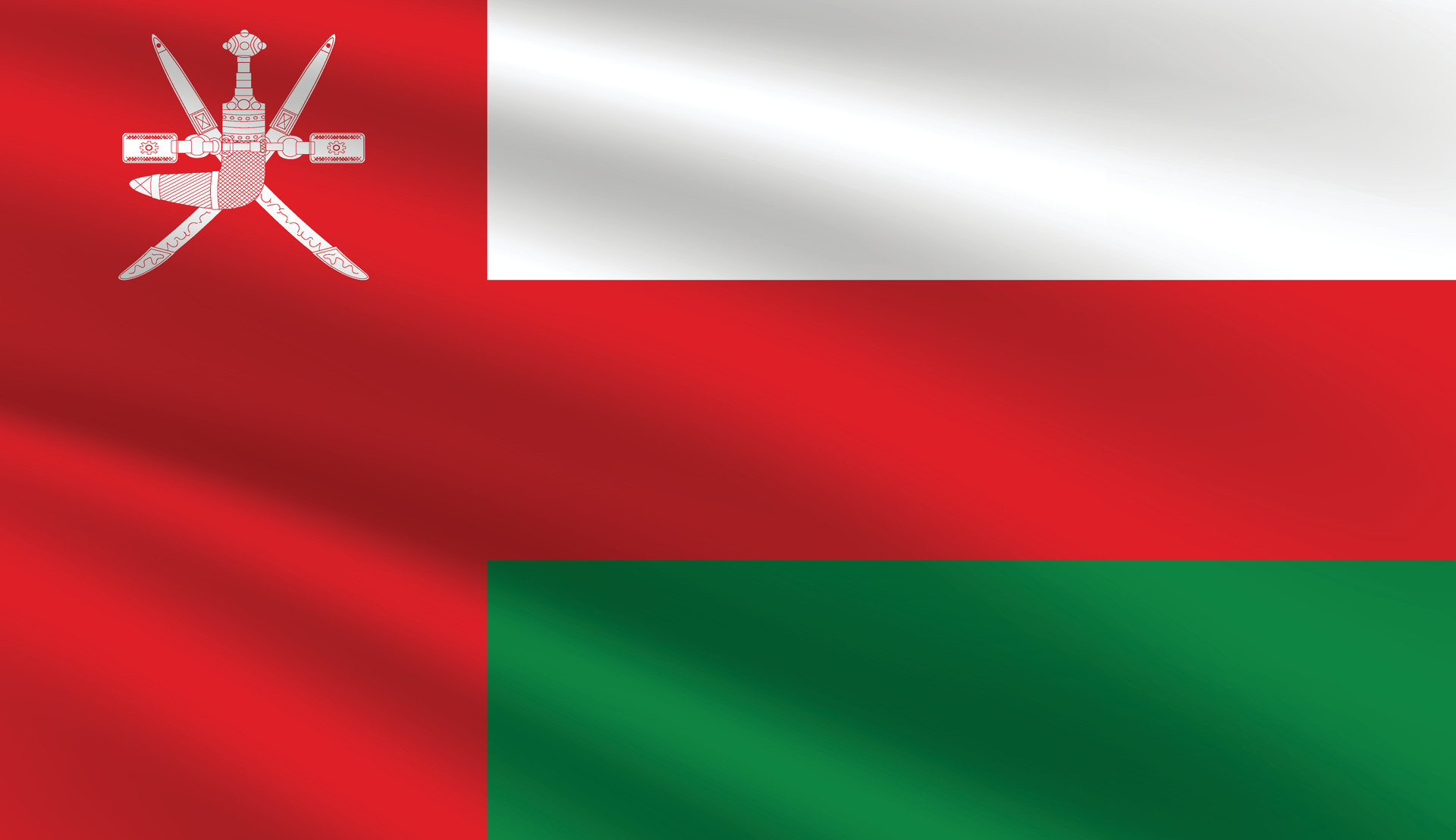
Flag of Oman
The flag of Oman has three horizontal stripes of white, red, and green, with a vertical red band on the left side. The national emblem, showing crossed swords and a khanjar (traditional dagger), appears in white on the red band. White represents peace and prosperity, red stands for battles fought and bravery, and green symbolizes fertility and mountains. The flag reflects Oman’s history, culture, strength, and national pride.
Overview
Introduction
Oman is a beautiful and historic country located in the southeastern part of the Arabian Peninsula in the Middle East. It shares borders with Saudi Arabia, the United Arab Emirates, and Yemen, and it has a long coastline along the Arabian Sea and the Gulf of Oman. The country is known for its rich culture, peaceful environment, and natural beauty. Oman has played an important role in trade and maritime activities for many centuries.
Capital and Geography
The capital city of Oman is Muscat, which is also the largest city in the country. Muscat is famous for its clean streets, beautiful mosques, and traditional markets called souqs. Oman has diverse geography, including mountains, deserts, valleys, and beaches. The Hajar Mountains are one of the most important mountain ranges in the country. Oman’s climate is mostly hot and dry, but some areas receive rainfall during the monsoon season.
Government and Leadership
Oman is a monarchy, and the ruler is called the Sultan. The current Sultan is Haitham bin Tariq, who came to power in 2020. He is responsible for leading the country and making important decisions. Oman has a stable government and is known for maintaining peaceful relations with other countries.
Economy
Oman’s economy is mainly based on oil and natural gas. These natural resources provide a large part of the country’s income. In recent years, Oman has been working to diversify its economy by developing tourism, fishing, and trade. The country exports oil, fish, and minerals. Oman also has important ports that help in international trade.
Culture and Religion
Omani culture is deeply rooted in Arab traditions and Islamic values. Islam is the main religion, and most people in Oman are Muslims. Traditional dress is important, with men wearing a white robe called a dishdasha and women wearing colorful dresses. Omani people are known for their hospitality and kindness.
Tourism and Importance
Oman is becoming a popular tourist destination because of its natural beauty and historical sites. Visitors come to see deserts, forts, beaches, and mountains. Famous places include Nizwa Fort, Wahiba Sands, and Salalah. Tourism helps the country’s economy grow and creates jobs for people.
Conclusion
In conclusion, Oman is a peaceful and culturally rich country with a strong history and beautiful landscapes. Its stable leadership, growing economy, and traditional values make it an important nation in the Middle East. Oman continues to develop while preserving its unique heritage and identity.