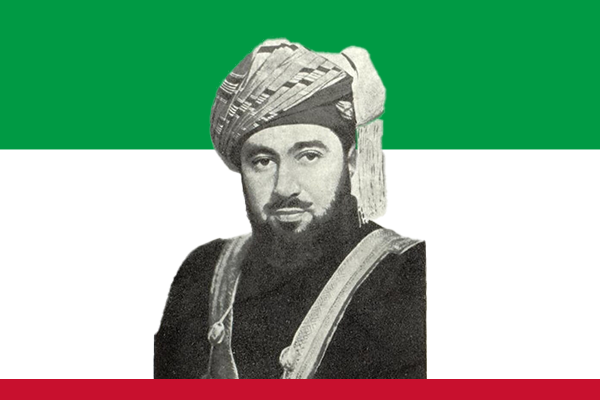
Early Life and Background
Said bin Taimur was born on August 13, 1910, into the ruling Al Said dynasty, which had governed Oman since the 18th century. He was the son of Sultan Taimur bin فيصل. Said received his education both in Oman and abroad, including in Iraq, where he gained exposure to administration and governance.
In 1932, after his father abdicated the throne, Said bin Taimur became the Sultan at the young age of 21. At that time, Oman was economically weak and politically unstable. He inherited a country with large debts and internal conflicts.
His Rule and Policies
During his reign, Sultan Said bin Taimur focused heavily on maintaining stability and control. He followed very conservative policies and limited modernization. He restricted education, infrastructure development, and foreign influence because he feared that rapid change could weaken his authority.
Under his rule, there were only a few schools and hospitals in the country. Travel was also restricted, and many modern technologies were not allowed. Even basic development such as roads and communication systems was very limited.
However, he did achieve some positive results. He reduced the country’s debt and improved financial stability, especially after oil exploration began in the 1960s. Oil revenues slowly improved Oman’s economic condition, although development remained slow.
Internal Conflicts and Challenges
One of the biggest challenges during his reign was the Dhofar Rebellion, which began in the 1960s in southern Oman. Many people were unhappy with the lack of development, poverty, and strict policies. The rebellion grew stronger and threatened the stability of his rule.
His inability to modernize the country and respond to people’s needs increased dissatisfaction among citizens and members of the royal family.
Overthrow and End of His Rule
In 1970, Said bin Taimur was overthrown in a palace coup led by his son, Qaboos bin Said. The coup was supported by the British, who wanted modernization and stability in Oman.
After the coup, Said bin Taimur was sent into exile in London, where he lived until his death on October 19, 1972.
His son, Sultan Qaboos, immediately began modernizing Oman by building schools, hospitals, roads, and improving living standards.
Legacy and Historical Importance
Said bin Taimur’s legacy is complex. On one hand, he brought financial stability and maintained independence during difficult times. On the other hand, his resistance to modernization kept Oman isolated and underdeveloped compared to other countries.
His removal marked a turning point in Oman’s history. After his rule ended, Oman transformed rapidly into a modern nation.
Today, Said bin Taimur is remembered as a ruler who preserved traditional authority but struggled to adapt to changing times.
Conclusion
King Said bin Taimur was a significant figure in Oman’s history. His long reign was marked by strict control, limited development, and eventual overthrow. Although his policies slowed modernization, his rule set the stage for the major reforms that followed under his son. His life represents an important chapter in the transition of Oman from a traditional state to a modern country.