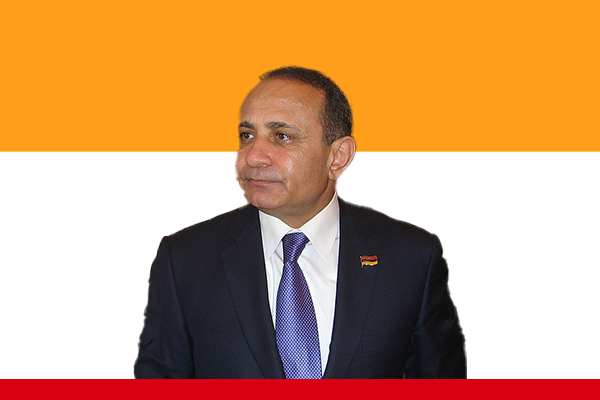
Early Life and Education
Hovik Abrahamyan was born on January 24, 1958, in the village of Mkhchyan, located in the Ararat region of Armenia. He grew up in a rural environment, which helped shape his understanding of the social and economic issues faced by ordinary citizens. He completed his higher education at the Armenian State Institute of National Economy, where he studied economics. His educational background played an important role in preparing him for administrative and leadership roles in government.
Entry into Politics
Abrahamyan began his political career in the 1990s, a period when Armenia was newly independent after the collapse of the Soviet Union. Like many politicians of his generation, he gained experience in local administration. He served in various regional government positions, including leadership roles in the Ararat region. His ability to manage administrative affairs helped him gain recognition within Armenia’s political circles.
He later became involved with the Republican Party of Armenia, one of the country’s most powerful political parties. His loyalty and organizational skills helped him rise steadily within the party ranks.
Role as Speaker of the National Assembly
Before becoming Prime Minister, Abrahamyan served as the Speaker of the National Assembly of Armenia. He held this important position from 2008 to 2011 and again from 2012 to 2014. As Speaker, he was responsible for overseeing parliamentary debates, managing legislative processes, and maintaining political stability within the parliament.
His tenure as Speaker strengthened his reputation as an experienced and influential political leader. He developed strong relationships with other government officials and played a key role in passing important legislation.
Appointment as Prime Minister
In April 2014, Abrahamyan was appointed Prime Minister by President Serzh Sargsyan. His appointment was seen as a move to stabilize the government and address growing public dissatisfaction over economic conditions.
As Prime Minister, Abrahamyan focused on improving the economy, encouraging investment, and creating jobs. He promised reforms aimed at reducing corruption and increasing efficiency in government. His government also worked to improve Armenia’s relations with international partners and strengthen economic cooperation.
Challenges and Leadership
Abrahamyan’s term was marked by several major challenges. Armenia faced economic slowdown, rising unemployment, and public protests. Many citizens demanded better living conditions and more transparent governance.
Despite these difficulties, Abrahamyan attempted to introduce reforms and maintain political stability. However, his government faced criticism from opposition groups and civil society organizations, who argued that reforms were not progressing fast enough.
In September 2016, Abrahamyan resigned from his position. His resignation came as part of broader political changes within the Armenian government.
Legacy and Political Influence
Hovik Abrahamyan remains an important figure in Armenian politics. His career reflects the evolution of Armenia’s political system after independence. He held several high-level positions, including regional administrator, parliamentary speaker, and prime minister.
Supporters view him as an experienced leader who helped maintain stability during difficult times. Critics, however, argue that his government did not achieve enough reforms.
Conclusion
Hovik Abrahamyan’s tenure as Prime Minister of Armenia was a significant period in the country’s modern history. His leadership demonstrated the challenges of governing a developing country facing economic and political pressures. While opinions about his performance differ, his influence on Armenia’s political system is undeniable. His long career and service continue to make him a notable figure in Armenia’s national leadership.