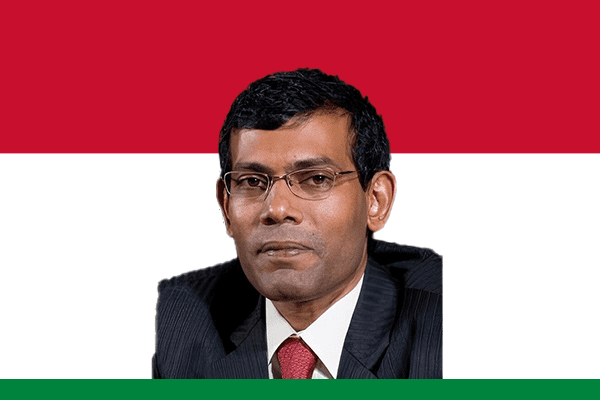
Early Life and Education
Mohamed Nasheed was born on May 17, 1967, in Malé, the capital city of the Maldives. He grew up in a politically aware environment and developed an early interest in social justice and governance. Nasheed completed his early education in the Maldives before pursuing further studies abroad. He attended schools in Sri Lanka and later studied maritime studies in the United Kingdom.
During his youth, Nasheed began expressing strong views about political reform and democratic rights. His writings and activism brought attention to government policies, which eventually led to his arrest several times during the authoritarian rule of former Maldivian president Maumoon Abdul Gayoom.
Political Activism and Democratic Movement
Mohamed Nasheed became one of the leading figures in the Maldivian pro-democracy movement. During the late 1980s and 1990s, he openly criticized government corruption and human rights violations. Authorities arrested him multiple times because of his political activities and journalism.
Despite these challenges, Nasheed continued advocating for democratic reforms. In 2003, he helped establish the Maldivian Democratic Party (MDP), the country’s first major opposition political party. Through this organization, he mobilized citizens and pushed for constitutional reforms and free elections.
Nasheed and other reformers organized peaceful protests and political campaigns that increased pressure on the government to allow democratic change. These efforts eventually led to the introduction of a new constitution and the first multi-party presidential election in the Maldives.
Presidency (2008–2012)
In 2008, Mohamed Nasheed won the presidential election and became the first democratically elected president of the Maldives. His victory ended the 30-year rule of Maumoon Abdul Gayoom. Nasheed’s presidency marked a historic turning point in Maldivian politics.
As president, Nasheed introduced major reforms in governance, transparency, and civil liberties. His administration strengthened democratic institutions and promoted freedom of expression. He also worked to improve the judicial system and fight corruption within government structures.
Nasheed gained global attention for his bold stance on climate change. The Maldives faces severe risks from rising sea levels, and Nasheed highlighted this issue on international platforms. In 2009, he organized the world’s first underwater cabinet meeting to draw global attention to climate threats facing island nations.
Resignation and Political Challenges
In February 2012, Mohamed Nasheed resigned from the presidency during a period of political unrest and protests. Nasheed later stated that security forces had pressured him to step down. His resignation sparked debate within the Maldives and internationally, with many supporters describing the event as a coup.
After leaving office, Nasheed remained active in politics. He continued leading the Maldivian Democratic Party and advocated for democratic reforms. In 2015, authorities arrested him on terrorism-related charges connected to a previous judicial decision. International human rights organizations criticized the trial and sentencing.
Following international pressure, Nasheed received permission to travel abroad for medical treatment, and he later lived in exile for several years.
Later Political Career
Mohamed Nasheed eventually returned to Maldivian politics and continued his leadership role within the Maldivian Democratic Party. In 2019, lawmakers elected him Speaker of the Maldivian Parliament. In this role, he worked to strengthen parliamentary democracy and support legislative reforms.
Nasheed also maintained his international reputation as a leading advocate for climate action. He collaborated with global organizations and governments to highlight the dangers of climate change for small island states.
Legacy and Global Influence
Mohamed Nasheed’s political career reflects resilience, activism, and dedication to democratic values. Many observers regard him as a symbol of democratic struggle in the Maldives. His efforts helped bring political pluralism, free elections, and greater civic participation to the country.
Internationally, Nasheed remains one of the most recognizable voices calling for urgent action against climate change. Through speeches, conferences, and activism, he continues encouraging global cooperation to protect vulnerable nations like the Maldives.
Today, Mohamed Nasheed stands as a significant figure in both Maldivian politics and international environmental advocacy.