MALDIVES
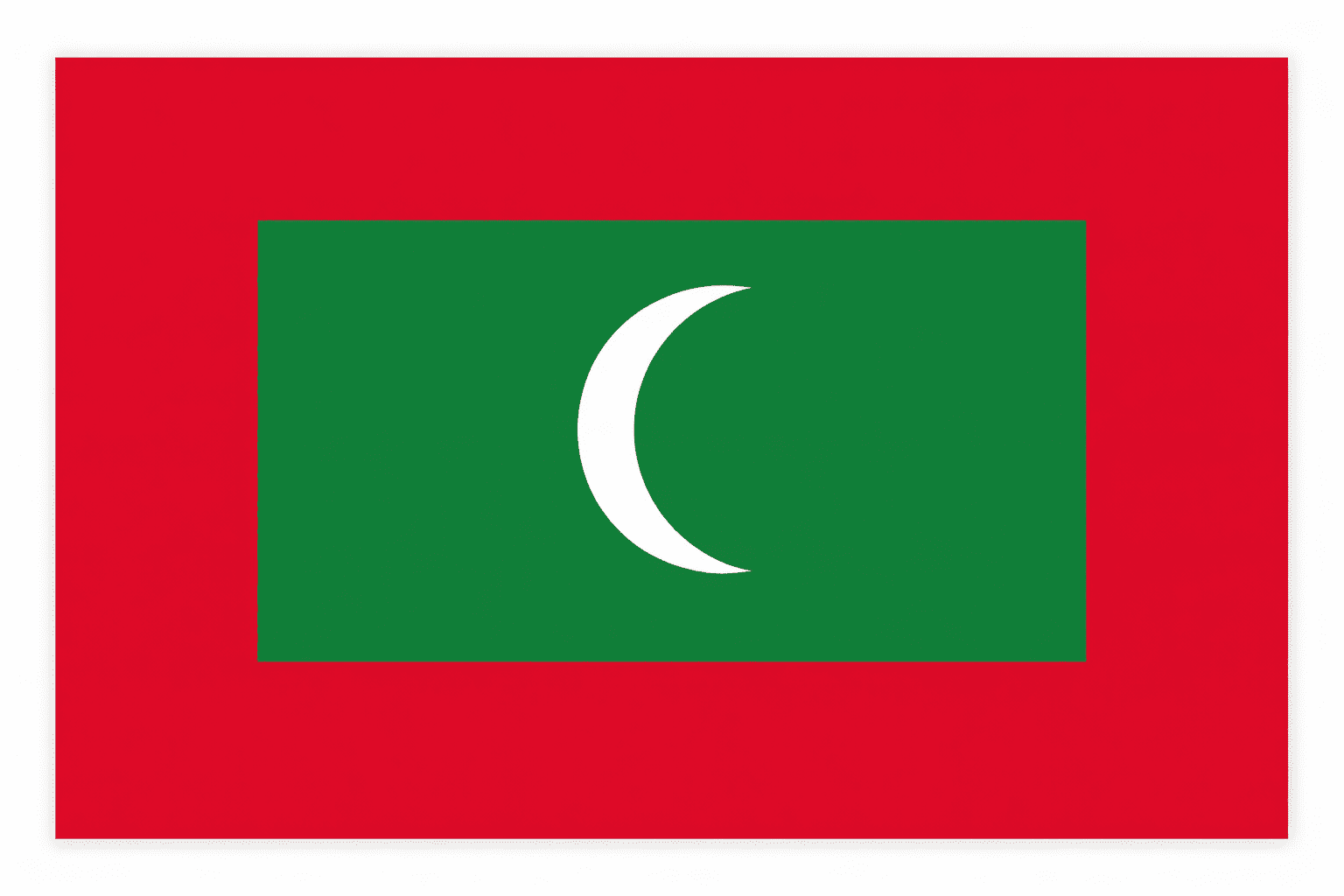
Maldives Flag
The flag of Maldives features a red background with a green rectangle in the center and a white crescent moon inside it. The red color symbolizes the blood of national heroes who sacrificed for the country. The green rectangle represents peace, prosperity, and life. The white crescent reflects Islam, the official religion of Maldives. This simple yet meaningful design shows the nation’s history, faith, and unity. The Maldives flag is a strong symbol of pride and identity.
Introduction
The Maldives is a small island country located in the Indian Ocean, southwest of Sri Lanka and India. It is known for its beautiful white-sand beaches, clear blue waters, and rich marine life. The Maldives consists of hundreds of small coral islands grouped into natural atolls. Because of its stunning environment and tropical climate, it has become one of the world’s most popular tourist destinations. Tourism plays a major role in the country’s economy and development.
Geography
The Maldives is made up of about 1,190 coral islands organized into 26 natural atolls spread across the Indian Ocean. Only around 200 of these islands are inhabited by local communities, while many others are used for tourism resorts. The capital city is Malé, which is the political, economic, and cultural center of the country. The Maldives is one of the lowest-lying countries in the world, with an average ground level of about 1.5 meters above sea level. Because of this, the country is considered highly vulnerable to climate change and rising sea levels.
History
The history of the Maldives dates back more than 2,000 years. Early settlers are believed to have come from nearby regions such as India and Sri Lanka. The islands were influenced by different cultures and religions over time. In the 12th century, the Maldives adopted Islam, which remains the official religion today.
The Maldives became a British protectorate in 1887, meaning it was under British protection while keeping internal self-rule. After many years of political development, the country gained full independence from the United Kingdom on July 26, 1965. Later, in 1968, the monarchy was abolished and the Maldives became a republic.
Government and Politics
The Maldives operates under a presidential republic system, where the president is both the head of state and head of government. The country has a multi-party political system and holds regular elections. The president leads the government and works with the People’s Majlis, the national parliament, to make laws and manage national affairs. Political reforms over the years have strengthened democratic institutions in the country.
Economy and Tourism
Tourism is the largest contributor to the Maldivian economy. The country is famous for luxury resorts, coral reefs, and water activities such as snorkeling and diving. Visitors from around the world travel to the Maldives to experience its natural beauty. In addition to tourism, fishing—especially tuna fishing—is another important industry. The government has also been working to expand sectors such as transportation, construction, and services.
Culture and Society
The culture of the Maldives reflects influences from South Asia, the Middle East, and Africa due to centuries of trade and migration. The official language is Dhivehi, and Islam plays a central role in daily life and traditions. Traditional music, dance, and crafts are important parts of Maldivian culture. Despite its small size, the Maldives has a unique cultural identity shaped by its island lifestyle and maritime history.