Mr. Viktor Yushchenko
In Office: 23 January 2005 – 25 February 2010
Political Party: Our Ukraine
Home state: Khoruzhivka
Lifespan: born 1954
Country: Ukraine
Image credit available here.
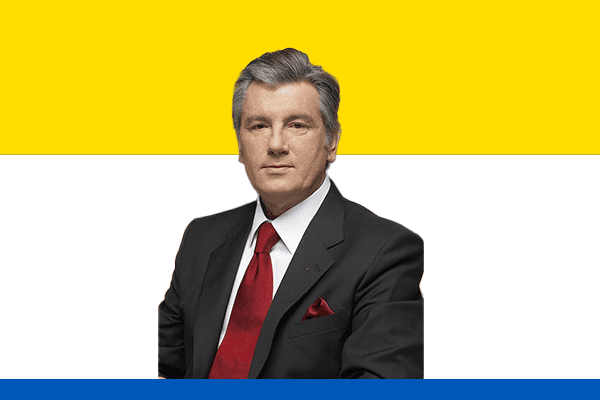
Early Life and Education
Viktor Andriyovych Yushchenko was born on February 23, 1954, in Khoruzhivka, a village in northeastern Ukraine. He grew up in a family of teachers, and his parents encouraged education and discipline. His father had survived imprisonment in Nazi concentration camps during World War II, which deeply influenced Yushchenko’s understanding of national suffering and resilience. He studied economics at the Ternopil Finance and Economics Institute and graduated in 1975. His academic background prepared him for a career in banking and public administration.
Career in Banking and Government
Yushchenko began his professional career in the Soviet banking system, where he gained valuable experience in finance and economic management. After Ukraine became independent in 1991, he quickly rose in public life. In 1993, he became head of the National Bank of Ukraine. During this period, he played a major role in stabilizing the country’s economy and introducing Ukraine’s national currency, the hryvnia, in 1996. His work earned him a reputation as a competent and reform-minded economist.
In 1999, President Leonid Kuchma appointed Yushchenko as Prime Minister of Ukraine. As prime minister, he pursued economic reforms, reduced inflation, and improved state finances. He also gained support from reformers and ordinary citizens who wanted cleaner government and greater economic stability. However, powerful political and business groups opposed his policies, and parliament removed him from office in 2001.
The Orange Revolution
The defining moment of Yushchenko’s political life came in 2004. He ran for president against Prime Minister Viktor Yanukovych in a highly contested election. During the campaign, Yushchenko survived a mysterious poisoning that seriously damaged his health and changed his appearance. Despite this setback, he continued campaigning and became a symbol of courage for many Ukrainians.
When authorities announced a disputed election result in favor of Yanukovych, Yushchenko and his supporters challenged the outcome. Massive peaceful demonstrations filled Kyiv’s Independence Square and other cities. These protests became known as the Orange Revolution. The movement demanded justice, transparency, and democracy. Ukraine’s Supreme Court ordered a new runoff vote, and Yushchenko won the presidency in December 2004.
Presidency and Reforms
Yushchenko took office in January 2005 with strong public support and high expectations. He promised to fight corruption, strengthen democratic institutions, and move Ukraine closer to Europe and NATO. His government promoted freedom of speech and supported a more open political system. Under his leadership, Ukraine experienced greater media freedom and a more competitive democratic environment than in many previous years.
He also focused on national memory and identity. Yushchenko encouraged recognition of the Holodomor, the devastating famine of 1932–1933, as a genocide against the Ukrainian people. He promoted Ukrainian language, culture, and historical awareness. These policies strengthened national consciousness but also created divisions among some groups in the country.
Challenges and Legacy
Despite his early popularity, Yushchenko faced many challenges during his presidency. Political infighting within the Orange coalition weakened his government. His alliance with Yulia Tymoshenko became unstable, and repeated conflicts reduced public confidence. Economic difficulties, corruption, and slow reforms disappointed many voters. As a result, his approval ratings declined sharply.
In the 2010 presidential election, Yushchenko received very limited support and left office after a single term. Even so, his historical importance remains significant. He defended democratic choice at a critical time and helped strengthen Ukraine’s path toward political pluralism and European orientation.
Conclusion
Viktor Yushchenko remains a central figure in Ukraine’s modern history. His leadership during the Orange Revolution inspired millions and demonstrated the power of peaceful protest. Although his presidency produced mixed results, he expanded democratic freedoms and reinforced Ukraine’s independent identity. Today, he is remembered as a leader who stood for democracy, national dignity, and the right of Ukrainians to choose their own future.