Early Life and Education
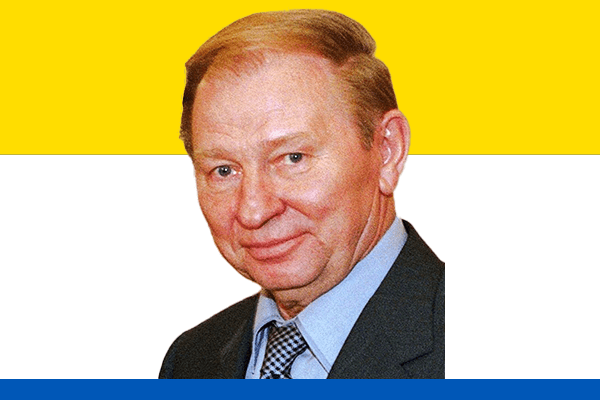
Leonid Danylovych Kuchma was born on August 9, 1938, in Chaikyne, a village in the Chernihiv region of Ukraine. He grew up during difficult wartime and postwar conditions, which shaped his disciplined and practical personality. Kuchma studied engineering at Dnipropetrovsk State University, where he specialized in mechanical engineering. His technical education helped him build a successful career in the Soviet aerospace industry.
Before entering politics, Kuchma worked in one of the Soviet Union’s most important missile and aerospace enterprises, the Yuzhmash plant in Dnipropetrovsk. He rose through the ranks and became a respected industrial manager. His background in science and engineering gave him a reputation as a capable administrator who understood economic and industrial issues.
Rise in Politics
After Ukraine gained independence in 1991, Leonid Kuchma entered national politics. He served as Prime Minister of Ukraine from 1992 to 1993 under President Leonid Kravchuk. During this period, Ukraine faced serious economic difficulties, including inflation, industrial decline, and uncertainty about its post-Soviet future. Kuchma promoted economic reform and stronger ties with Russia, which made him a prominent political figure.
In 1994, Kuchma ran for president against Leonid Kravchuk and won the election. He became the second President of Ukraine and took office during a critical period when the young state needed political stability and economic direction.
Presidency and Key Policies
As president, Kuchma focused on strengthening the state and improving the economy. He supported market-oriented reforms and encouraged privatization, though the process often benefited powerful business groups. His government introduced measures that helped reduce hyperinflation and stabilize the national economy. Over time, Ukraine experienced modest economic growth, especially in the late 1990s and early 2000s.
One of Kuchma’s important achievements was the adoption of the 1996 Constitution of Ukraine. This constitution established the framework for the country’s political system and defined the powers of the president, parliament, and judiciary. It was a major step in building Ukraine’s institutions as an independent state.
In foreign policy, Kuchma followed a multi-vector approach. He tried to maintain good relations with Russia while also improving ties with Europe and the United States. During his presidency, Ukraine gave up its nuclear arsenal under international agreements and strengthened its role in regional diplomacy. He sought to position Ukraine as a bridge between East and West.
Controversies and Challenges
Despite his achievements, Kuchma’s presidency was deeply controversial. Critics accused his administration of corruption, political favoritism, and limiting democratic freedoms. Powerful oligarchs gained influence during his years in office, and many people believed that state resources were used to support elite interests.
The most serious controversy came in 2000 with the disappearance and murder of journalist Georgiy Gongadze. Secret recordings, known as the “Cassette Scandal,” appeared to implicate senior officials and damaged Kuchma’s reputation. Although direct legal responsibility was never firmly established against him, the scandal led to protests and weakened public trust.
In 2004, the presidential election that followed Kuchma’s rule sparked the Orange Revolution. Mass protests erupted after allegations of electoral fraud in favor of his preferred candidate, Viktor Yanukovych. The movement demanded fair elections and democratic reforms, showing widespread frustration with the political system built during Kuchma’s presidency.
Legacy
Leonid Kuchma remains one of the most important and debated figures in Ukrainian history. He led Ukraine through a formative decade and helped establish the structures of the independent state. His presidency brought constitutional development, economic stabilization, and international recognition. However, it also became associated with corruption, weakened democratic institutions, and political scandals.
Kuchma’s legacy is therefore mixed. He helped shape modern Ukraine, but his methods and political environment also contributed to long-term tensions in Ukrainian politics. His years in power remain central to understanding Ukraine’s difficult transition from Soviet rule to independent nationhood.