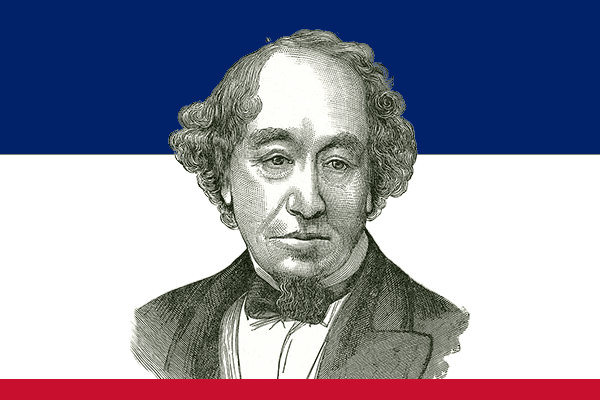
Mr. Benjamin Disraeli
In Office: 20 February 1874 – 21 April 1880
27 February 1868 – 1 December 1868
Political Party: Conservative
Home State: Bloomsbury
Lifespan: 1804–1881
Country: United Kingdom
Image credits available here.
Early Life and Background
Benjamin Disraeli was born on 21 December 1804 in London. His family originally came from a Jewish background, but his father converted the family to Christianity when Benjamin was still young. This conversion allowed Disraeli to participate fully in British political life, as Jews faced restrictions in public office at that time.
Disraeli received his education privately rather than at a traditional university. In his early career, he tried several professions, including law and journalism, but he gained recognition mainly through his novels and writings. His literary works explored politics and society, and they helped him develop the communication skills that later made him a powerful political speaker.
Entry into Politics
Disraeli entered the British Parliament in 1837 as a member of the Conservative Party. At first, many politicians criticized him and did not take him seriously. However, Disraeli gradually proved his abilities through strong debates and clever political tactics.
He became a close ally of Lord George Bentinck and soon emerged as one of the leading figures in the Conservative Party. During the political crisis over the repeal of the Corn Laws in 1846, Disraeli opposed the policies of Prime Minister Robert Peel. This conflict divided the Conservative Party, but it also increased Disraeli’s influence within the party.
First Term as Prime Minister
Benjamin Disraeli first served briefly as Prime Minister in 1868. Although this government lasted only a few months, it marked an important moment in his political career. After the general election of that year, the Liberal Party led by William Ewart Gladstone formed the next government.
Despite the short duration of his first term, Disraeli strengthened his reputation as a national leader and continued to lead the Conservative Party in opposition.
Second Term and Major Achievements
Disraeli returned to power in 1874 after the Conservatives won the general election. During this second term, which lasted until 1880, his government introduced several important reforms. His administration passed laws that improved housing conditions, protected workers, and promoted public health. These policies reflected his belief that the Conservative Party should care for the welfare of ordinary people.
Disraeli also played a major role in expanding the influence of the British Empire. In 1875, his government purchased shares in the Suez Canal, which strengthened Britain’s strategic position in global trade. He also supported imperial policies that increased British influence in Asia and Africa.
Relationship with Queen Victoria
Disraeli maintained a close and respectful relationship with Queen Victoria. He often used charm and diplomacy in his dealings with the monarch, and she admired his loyalty and political skills. In 1876, Queen Victoria granted him the title of Earl of Beaconsfield, elevating him to the House of Lords. This honor demonstrated the strong trust between the queen and her prime minister.
Later Years and Legacy
After losing the general election in 1880 to William Ewart Gladstone, Disraeli gradually withdrew from active politics. He died on 19 April 1881.
Benjamin Disraeli left a significant legacy in British political history. He transformed the Conservative Party into a more modern political organization and promoted the idea of “One Nation Conservatism,” which aimed to unite different social classes within the nation. His policies, speeches, and writings continue to influence political thought in the United Kingdom.