Mr. Winston Churchill
In Office: 26 October 1951 – 5 April 1955
10 May 1940 – 26 July 1945
Political Party: Conservative
Home State: Blenheim
Lifespan: 1874–1965
Country: United Kingdom
Image credits available here.
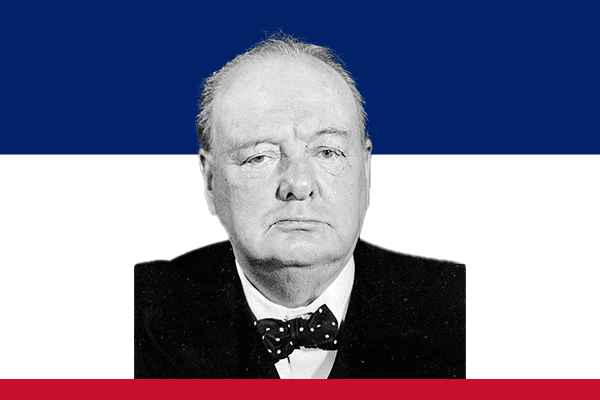
Early Life and Political Career
Winston Leonard Spencer Churchill was born on November 30, 1874, at Blenheim Palace in Oxfordshire, England. He came from a prominent aristocratic family. His father, Lord Randolph Churchill, was a well-known politician, and his mother, Jennie Jerome, came from the United States. Churchill studied at Harrow School and later attended the Royal Military Academy Sandhurst. After completing his military education, he joined the British Army and served in several military campaigns.
Churchill also worked as a war correspondent, which helped him gain fame at a young age. He entered politics in 1900 when he became a Member of Parliament. During his long political career, he held several important government positions, including First Lord of the Admiralty, Home Secretary, and Chancellor of the Exchequer. Although his career faced setbacks, especially after the Gallipoli campaign during World War I, he returned to politics with determination and resilience.
Leadership During World War II
Winston Churchill became Prime Minister on May 10, 1940, at a time when Europe was in deep crisis. Nazi Germany had already invaded several countries, and Britain stood in grave danger. Churchill replaced Neville Chamberlain and immediately formed a coalition government. He united political parties and focused the nation on survival and victory.
Churchill became famous for his powerful speeches, which boosted public morale. His words, such as “We shall fight on the beaches,” encouraged the British people to remain strong despite bombings and military threats. He worked closely with Allied leaders, including Franklin D. Roosevelt of the United States and Joseph Stalin of the Soviet Union, to defeat Adolf Hitler and the Axis powers.
His leadership during the Battle of Britain and throughout the war showed his courage and refusal to surrender. He traveled widely, met military leaders, and made key strategic decisions. Under his guidance, Britain remained determined until the Allies achieved victory in 1945.
Later Years and Legacy
Although Churchill led Britain to victory in World War II, his party lost the general election in 1945. However, he returned as Prime Minister in 1951 and served until 1955. During his second term, he focused on foreign policy, post-war recovery, and Britain’s place in the changing world. He also warned early about the dangers of Soviet expansion, famously referring to the “Iron Curtain” in Europe.
Apart from politics, Churchill was a gifted writer and historian. He wrote many books and won the Nobel Prize in Literature in 1953. His works reflected his deep understanding of history and leadership.
Winston Churchill died on January 24, 1965. People around the world remember him as a fearless wartime leader, a brilliant speaker, and a statesman of extraordinary influence. His life showed courage, persistence, and devotion to public service. Winston Churchill continues to stand as a symbol of strength in the face of adversity.