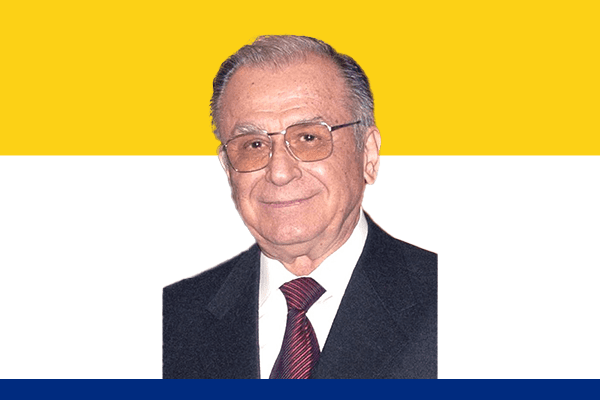
Early Life and Political Beginnings
Ion Iliescu was born on March 3, 1930, in Oltenița, Romania. His family supported left-wing political ideas, and that environment influenced his early worldview. As a young man, Iliescu pursued higher education in engineering and studied at the Moscow Energy Institute in the Soviet Union. During his student years, he developed strong connections with communist political circles.
After returning to Romania, Iliescu joined the Romanian Communist Party and quickly advanced within its ranks. His intelligence, discipline, and administrative skills helped him gain recognition among party leaders. He held several government and party positions during the 1960s and early 1970s. However, his relationship with the leadership of Nicolae Ceaușescu eventually deteriorated. Ceaușescu sidelined Iliescu because he viewed him as a potential rival and because Iliescu expressed more moderate political views.
Role in the 1989 Romanian Revolution
In December 1989, mass protests erupted across Romania against the authoritarian rule of Nicolae Ceaușescu. Demonstrators demanded political freedom, economic reforms, and an end to the dictatorship. As the revolution intensified, Ceaușescu’s regime collapsed. During this chaotic moment, Ion Iliescu stepped forward as a central political figure.
Iliescu helped organize the National Salvation Front (NSF), a political group that assumed control of the government after the fall of the communist regime. The NSF promised democratic reforms and free elections. Iliescu emerged as the leader of the transitional government and quickly gained national attention.
Romania held its first democratic elections in May 1990. Ion Iliescu won the presidency with a large majority of votes. His victory demonstrated the public’s trust in his leadership during a time of uncertainty.
Leadership and Political Policies
During his presidency, Iliescu focused on stabilizing Romania’s political system and guiding the country toward democratic governance. His government introduced constitutional reforms, encouraged the development of political parties, and supported the creation of democratic institutions. Romania adopted a new constitution in 1991, which strengthened democratic structures and established a framework for political pluralism.
Iliescu also faced serious challenges during his leadership. Economic reforms created difficulties for many citizens because the country struggled to transition from a centrally planned economy to a market-based system. Critics accused his government of moving too slowly on reforms and maintaining too many links with the old communist structure.
Despite these criticisms, Iliescu remained an influential political figure. He served as President of Romania from 1990 to 1996 and again from 2000 to 2004. His long political career allowed him to influence Romania’s domestic and foreign policies for more than a decade.
Legacy and Historical Importance
Ion Iliescu left a lasting impact on Romania’s political landscape. Supporters credit him with guiding the country through a fragile period after the fall of communism and helping establish democratic institutions. They argue that his leadership provided stability during a time of political uncertainty.
Critics, however, often question his decisions during the early years of Romania’s transition. Some believe that his government did not move quickly enough to reform political structures and eliminate the influence of former communist elites.
Even with these debates, historians widely recognize Ion Iliescu as one of the most important leaders in modern Romanian history. His role in the 1989 revolution and his influence over Romania’s democratic transition ensured that his name remains closely connected with the country’s political transformation.