Mr. Theo van Lynden van Sandenburg
In Office: 20 August 1879 – 23 April 1883
Political Party: Independent Antirevolutionary
Home State: Amsterdam
Lifespan: 1826–1885
Country: Netherland
Image credits available here.
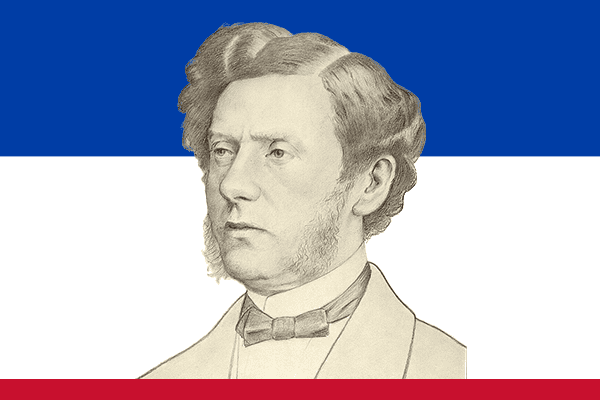
Early Life and Political Background
Theo van Lynden van Sandenburg was born on 2 November 1826 in Utrecht, Netherlands, into an aristocratic Dutch family with a tradition of public service. His upbringing exposed him to politics, law, and administration from an early age. He studied law and developed strong interests in governance and public affairs.
After completing his education, he began working in public administration and quickly earned respect for his organizational abilities and balanced political views. Sandenburg later entered national politics and became a member of the Dutch parliament. His reputation as a pragmatic and moderate politician helped him gain influence among conservative and Protestant political circles.
Rise to National Leadership
During the nineteenth century, Dutch politics experienced significant changes as parliament gained greater authority. Influential statesmen such as Johan Rudolph Thorbecke had already strengthened constitutional government earlier in the century. In this evolving political environment, Sandenburg built his career through cooperation and negotiation rather than confrontation.
In 1879, William III of the Netherlands appointed Theo van Lynden van Sandenburg as Prime Minister. At that time, the Netherlands did not yet have strong political parties, so leaders had to build coalitions among different ideological groups. Sandenburg formed a conservative cabinet and focused on maintaining stability in the government.
Leadership as Prime Minister (1879–1883)
As prime minister, Sandenburg managed several complex political debates. One of the most significant issues during his tenure involved education policy, particularly the role of religious schools. Protestant and Catholic groups demanded greater equality between public and religious education institutions. Sandenburg’s government attempted to balance these competing interests while preserving national unity.
He also focused on administrative reforms and parliamentary cooperation. His leadership style emphasized compromise and practical decision-making. Instead of dominating political discussions, he encouraged dialogue between different factions in parliament.
Another challenge during his administration involved economic modernization. The Netherlands began adapting to industrial and commercial changes occurring across Europe. Sandenburg supported policies that encouraged infrastructure development and trade while maintaining fiscal discipline.
Political Style and Governance
Theo van Lynden van Sandenburg demonstrated a leadership style based on moderation and diplomacy. He preferred negotiation over political confrontation and believed that stable governance required cooperation among diverse groups. His aristocratic background gave him social influence, but he relied more on administrative competence than personal authority.
Observers of the time described him as a calm and thoughtful leader who carefully weighed policy decisions. He respected parliamentary processes and strengthened the role of representative government in the Netherlands.
End of His Premiership
Political tensions surrounding education reform eventually weakened Sandenburg’s cabinet. Disagreements among political groups made it difficult to maintain parliamentary support. In 1883, his government resigned, ending his term as prime minister.
Although his administration faced criticism from some political factions, historians recognize that he governed during a transitional era when Dutch politics moved toward stronger party structures and modern democratic practices.
Legacy
Theo van Lynden van Sandenburg left an important mark on Dutch political history. His leadership represented the gradual shift from aristocratic governance toward modern parliamentary politics. He demonstrated how cooperation and compromise could maintain political stability during periods of ideological conflict.