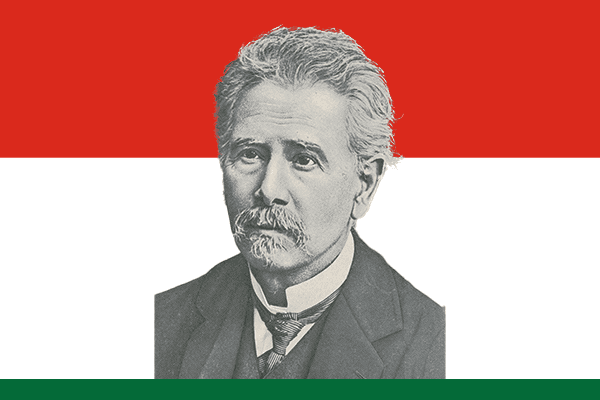
Mr. Teófilo Braga
In Office: 29 May 1915 – 5 October 1915
Political Party: Portuguese Republican Party
Home state: Rio de Janeiro
Lifespan: 1843–1924
Country: Portugal
Image credit available here.
Early Life and Education
Teófilo Braga was born on February 24, 1843, in Ponta Delgada, located in the Azores. He grew up in a modest family and showed a strong passion for literature and learning from an early age. Instead of limiting himself to basic education, he pursued higher studies at the University of Coimbra, one of Portugal’s most prestigious institutions.
During his academic years, he actively engaged in intellectual debates and developed a deep interest in philosophy, history, and politics. He embraced positivist ideas, which emphasized reason, science, and progress. These influences shaped his worldview and later guided his political actions.
Literary Contributions
Braga built a distinguished career as a writer and scholar. He produced numerous works on Portuguese literature, folklore, and history. Rather than passively studying culture, he actively preserved and promoted Portugal’s literary heritage. His research on traditional stories and poetry helped strengthen national identity.
He also wrote essays and critiques that reflected his progressive thinking. Through his writings, he encouraged social reform and challenged outdated traditions. His literary work earned him recognition as one of Portugal’s leading intellectuals.
Political Career and Republican Leadership
Teófilo Braga actively participated in the republican movement that opposed the Portuguese monarchy. He believed that a republic would better serve the people by promoting equality and democratic governance. Instead of remaining an observer, he took direct action by joining political groups and advocating for change.
In 1910, the Portuguese Republican Revolution overthrew the monarchy and established the Portuguese Republic. Following this historic event, Braga assumed a leadership role in the provisional government. He served as the head of the Provisional Government, guiding the country during a critical transition period.
His leadership focused on stabilizing the new republic and implementing reforms. He worked to establish democratic institutions and promote civil liberties. His efforts ensured that the new government functioned effectively during its early stages.
Presidency
Teófilo Braga later served as President of Portugal, although his terms were brief. He first acted as provisional president in 1910–1911 and later returned to the presidency in 1915 during a time of political instability. Rather than holding power passively, he actively worked to maintain order and uphold republican principles.
His presidency reflected his commitment to democracy and public service. He prioritized national unity and sought to strengthen the foundations of the republic. Despite challenges, he remained dedicated to his ideals.
Challenges and Legacy
Braga faced significant challenges, including political instability and opposition from monarchist supporters. However, he responded with determination and resilience. He did not retreat from difficulties; instead, he actively defended the republic and its values.
His legacy extends beyond politics. As a writer and thinker, he influenced generations of scholars and citizens. His contributions to literature, culture, and governance continue to shape Portugal’s identity.
Conclusion
Teófilo Braga stands as a pivotal figure in Portuguese history. Through active leadership and intellectual contributions, he helped establish and guide the Portuguese Republic. His dedication to progress, democracy, and cultural preservation ensures his lasting significance.