PORTUGAL
Portugal Flag
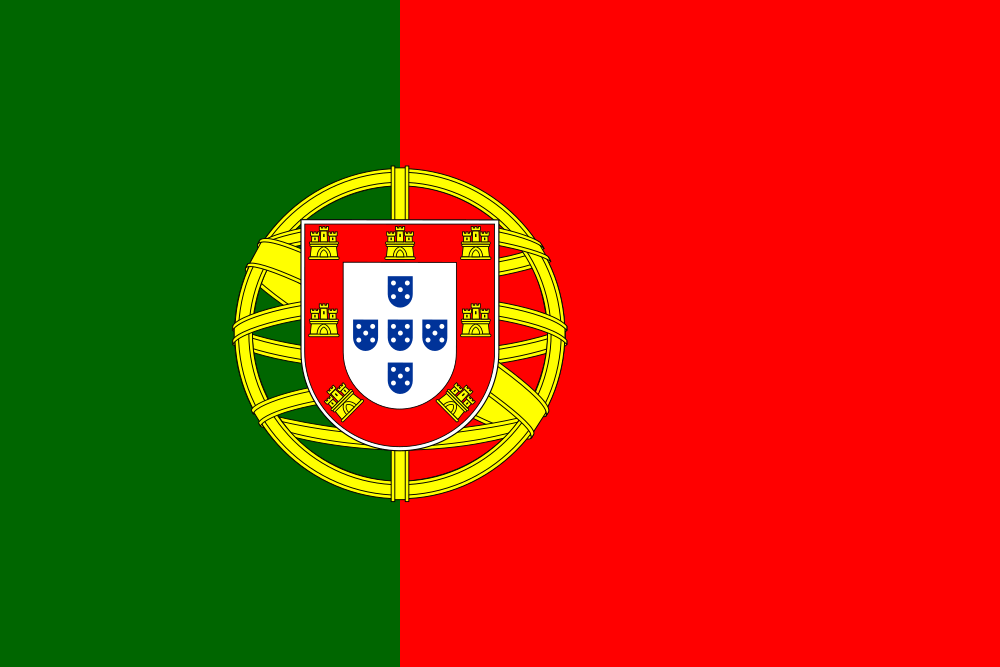
The Flag of Portugal features a vertical bicolor design of green and red, with green on the hoist side and red on the fly side. At the boundary stands the national coat of arms, placed over a yellow armillary sphere. The green symbolizes hope, while the red represents revolution and bravery. The armillary sphere reflects Portugal’s maritime history, and the shield highlights the country’s medieval victories and rich heritage.
Introduction
Portugal is a historic and culturally rich country located in southwestern Europe on the Iberian Peninsula. It shares its only land border with Spain and faces the Atlantic Ocean to the west and south. Known for its maritime heritage, Portugal played a central role in global exploration during the Age of Discovery.
Geography and Climate
Portugal features diverse landscapes, including coastal plains, rolling hills, and mountainous regions. The northern part of the country has lush greenery and river valleys, while the south, particularly the Algarve region, is famous for its warm climate and beautiful beaches. The Atlantic Ocean strongly influences Portugal’s weather, creating mild winters and warm summers.
History and Heritage
Portugal has a long and fascinating history that dates back to ancient times. It became an independent kingdom in the 12th century. During the 15th and 16th centuries, Portuguese explorers such as Vasco da Gama and Ferdinand Magellan led groundbreaking voyages, establishing trade routes to Africa, Asia, and South America.
This era, known as the Age of Discovery, brought immense wealth and global influence to Portugal. Although its empire declined over time, the cultural and historical impact of this period remains visible in architecture, language, and traditions.
Government and Economy
Portugal operates as a democratic republic with a president as the head of state and a prime minister as the head of government. It is a member of major international organizations such as the European Union and the United Nations.
The Portuguese economy relies on services, tourism, agriculture, and industry. Tourism plays a major role, with visitors attracted to historic cities like Lisbon and Porto. Portugal also exports products such as wine, cork, textiles, and seafood.
Culture and Traditions
Portugal has a vibrant culture shaped by centuries of history and global connections. The Portuguese language is widely spoken, not only in Portugal but also in countries such as Brazil, Angola, and Mozambique. Traditional music, especially Fado, reflects themes of longing and nostalgia.
Portuguese cuisine includes popular dishes like bacalhau (salted codfish) and pastel de nata (custard tart). Festivals, art, and architecture further highlight the country’s cultural richness.
Modern Portugal
Today, Portugal is known for its high quality of life, safety, and welcoming atmosphere. It has developed into a modern European nation with strong infrastructure and a growing focus on technology and innovation. The country actively promotes renewable energy and sustainability initiatives.
Portugal also maintains strong international relationships and continues to attract tourists, students, and professionals from around the world.
Conclusion
Portugal stands as a nation where history and modernity blend seamlessly. From its role in global exploration to its vibrant present-day culture, it remains an influential and attractive country. Its scenic beauty, rich traditions, and progressive outlook make Portugal a unique and important part of Europe.