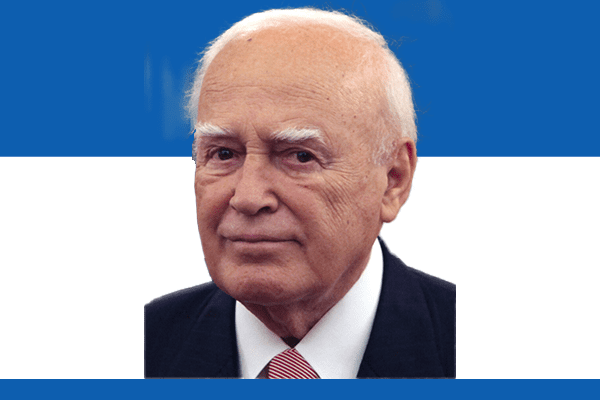
Early Life and Education
Karolos Papoulias was born on June 4, 1929, in Ioannina, Greece. He grew up in a politically aware environment that shaped his interest in public affairs. He pursued higher education in law at the University of Athens and later continued his studies in international law in Germany and Italy. Instead of limiting himself to academic learning, he actively engaged in political discussions and intellectual debates, which strengthened his understanding of governance and diplomacy.
During his early years, he also participated in resistance activities during World War II, demonstrating courage and commitment to national independence. These experiences influenced his future political ideology and dedication to democratic values.
Political Career
Papoulias joined the Panhellenic Socialist Movement (PASOK) and became a close associate of Andreas Papandreou. He actively supported the party’s vision of social justice, national sovereignty, and economic reform. Over time, he emerged as a key figure within the party and contributed significantly to its policies.
He served multiple terms as a Member of the Hellenic Parliament, where he played an active role in legislative processes. Rather than remaining in the background, he engaged directly in political debates and policy-making, strengthening his influence within Greek politics.
Role as Foreign Minister
One of Papoulias’s most important contributions came during his tenure as Greece’s Minister for Foreign Affairs from 1985 to 1989 and again from 1993 to 1996. In this role, he actively shaped Greece’s international relations and worked to improve ties with neighboring countries.
He promoted dialogue and cooperation in the Balkans, a region often affected by political tensions. He also strengthened Greece’s position within the European Union and other international organizations. His diplomatic skills helped reduce conflicts and enhance regional stability.
Presidency of Greece
Karolos Papoulias became President of Greece in 2005 and was re-elected in 2010. As president, he served as a unifying figure for the nation. Although the role is largely ceremonial, he actively engaged with citizens, political leaders, and international representatives.
During his presidency, Greece faced a severe economic crisis that tested the country’s resilience. Papoulias responded by encouraging unity, responsibility, and cooperation among political parties and citizens. Instead of adopting a passive stance, he addressed the public, expressed concerns about social inequality, and supported efforts to overcome the crisis.
Leadership Style and Legacy
Papoulias led with integrity, humility, and a strong sense of duty. He emphasized democratic principles, social justice, and national dignity. He did not seek personal power; instead, he focused on serving the country and strengthening its institutions.
His long career in politics and diplomacy left a lasting impact on Greece. He helped shape foreign policy, supported democratic governance, and guided the nation during difficult times. His leadership earned respect both domestically and internationally.
Personal Life and Death
Karolos Papoulias maintained a relatively private personal life. He was known for his modest lifestyle and dedication to public service. He passed away on December 26, 2021, at the age of 92. His death marked the end of an era in Greek politics, and leaders across the world paid tribute to his contributions.
Conclusion
Karolos Papoulias remains a respected figure in Greek history. Through active leadership and unwavering commitment to democracy, he served his country with distinction. His legacy continues to inspire future generations of leaders and citizens.