GREECE
Greece Flag
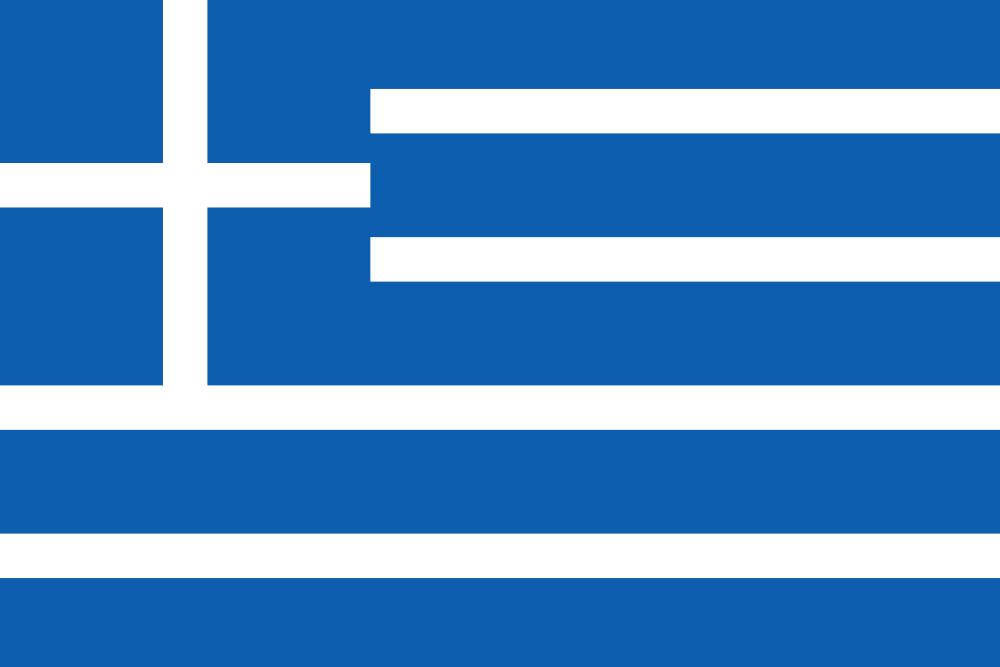
The flag of Greece features nine horizontal stripes alternating blue and white, symbolizing the nine syllables of the phrase “Eleftheria i Thanatos” (Freedom or Death). A white cross on a blue square appears in the upper hoist-side corner, representing Greek Orthodox Christianity. The blue color reflects the sea and sky, while white stands for purity and peace. Adopted officially in 1978, the flag is a strong national symbol of Greek identity and heritage.
Introduction to Greece
Greece is a historic country located in southeastern Europe, known for its rich cultural heritage, ancient civilization, and beautiful landscapes. It lies at the crossroads of Europe, Asia, and Africa, making it an important center for trade and cultural exchange throughout history. The capital city, Athens, is one of the oldest continuously inhabited cities in the world and is widely regarded as the cradle of Western civilization.
Geography and Landscape
Greece is characterized by a diverse geography that includes mountains, valleys, and thousands of islands scattered across the Aegean Sea and Ionian Sea. About 80% of the country is mountainous, with ranges such as the Pindus Mountains dominating the mainland. The country has over 6,000 islands, of which around 200 are inhabited, including famous ones like Crete and Santorini. This varied landscape contributes to Greece’s natural beauty and makes it a popular tourist destination.
History and Ancient Civilization
Greece is best known for its ancient civilization, which laid the foundations for modern democracy, philosophy, science, and the arts. Ancient city-states such as Athens and Sparta played crucial roles in shaping Greek history. Famous philosophers like Socrates, Plato, and Aristotle influenced Western thought for centuries. Greece was also the birthplace of the Olympic Games, first held in Olympia in 776 BCE.
Culture and Traditions
Greek culture is deeply rooted in its ancient past and Orthodox Christian traditions. The Greek Orthodox Church plays a significant role in daily life and national identity. Greek cuisine, known for dishes like Moussaka and Souvlaki, reflects Mediterranean flavors and healthy ingredients such as olive oil, vegetables, and seafood. Festivals, music, and dance are important aspects of Greek culture, often celebrated with enthusiasm.
Economy and Modern Greece
Modern Greece has a mixed economy based on tourism, shipping, agriculture, and services. Tourism is a major contributor, with millions of visitors attracted to historic sites like the Acropolis of Athens. Greece is also a member of the European Union, which influences its economic and political policies. Despite facing economic challenges in recent decades, the country continues to recover and grow.
Conclusion
In conclusion, Greece is a nation that beautifully blends ancient history with modern life. Its contributions to philosophy, politics, and culture have had a lasting impact on the world. With its stunning landscapes, rich traditions, and historical significance, Greece remains a fascinating and influential country in Europe and beyond.