Early Life and Education
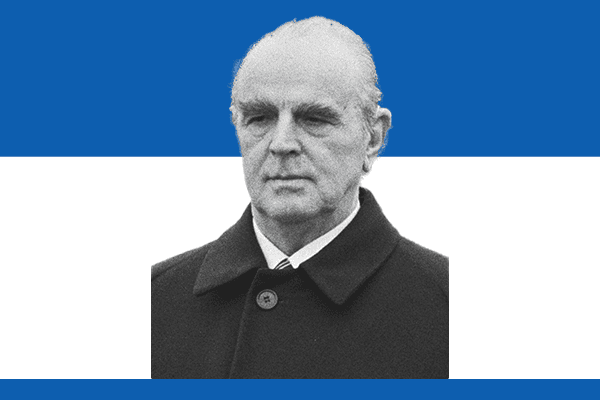
Konstantinos Karamanlis was born on March 8, 1907, in the village of Proti in northern Greece. He grew up in a politically aware family that encouraged education and civic responsibility. He studied law at the University of Athens, where he developed a strong interest in public affairs and governance.
Instead of remaining focused solely on academic pursuits, he actively engaged in political discussions and national issues. His early exposure to law and politics helped him build the foundation for his future leadership.
Entry into Politics
Karamanlis began his political career in the 1930s when he was elected as a Member of the Greek Parliament. He quickly earned recognition for his determination and administrative skills. Rather than adopting a passive role, he actively participated in legislative work and policy development.
He gained further prominence when he served in various ministerial roles. His ability to handle complex political challenges helped him rise within the political system.
Prime Ministership
In 1955, Konstantinos Karamanlis became Prime Minister of Greece. He immediately initiated economic and infrastructure reforms aimed at modernizing the country. He improved transportation networks, strengthened public administration, and encouraged industrial growth.
He actively promoted Greece’s integration with Western Europe. His efforts led to Greece signing an association agreement with the European Economic Community, laying the groundwork for future membership.
Karamanlis served multiple terms as prime minister, during which he emphasized stability and development. However, political tensions and disagreements eventually led him to resign and go into self-imposed exile in 1963.
Role in Restoring Democracy
Karamanlis returned to Greece in 1974 during a time of political crisis following the fall of the military junta. He immediately took charge and led the transition from dictatorship to democracy, a period known as the “Metapolitefsi.”
Rather than hesitating, he acted decisively by organizing free elections and establishing a new democratic constitution. He founded the New Democracy party and guided the country toward political stability.
He also worked to secure Greece’s full membership in the European Economic Community in 1981, strengthening the country’s ties with Europe and boosting its international standing.
Presidency and Later Years
After serving as prime minister, Karamanlis became President of Greece in 1980. In this role, he continued to influence national unity and democratic values. He maintained an active presence in political life and supported the country’s continued development.
His leadership style combined pragmatism with vision. He focused on long-term national interests rather than short-term political gains.
Legacy and Impact
Konstantinos Karamanlis left a lasting legacy in Greek politics. He modernized the country’s infrastructure, strengthened democratic institutions, and anchored Greece firmly within the European community.
Instead of allowing political instability to define Greece, he actively guided the nation toward stability and progress. His leadership during critical moments ensured the survival and growth of democratic governance.
Today, many consider him the architect of modern Greek democracy. His contributions continue to influence Greece’s political landscape and international relations.
Conclusion
Konstantinos Karamanlis remains a central figure in Greece’s history. Through active leadership and decisive action, he transformed the nation during some of its most challenging times. His dedication to democracy, development, and European integration secures his place as one of Greece’s greatest statesmen.