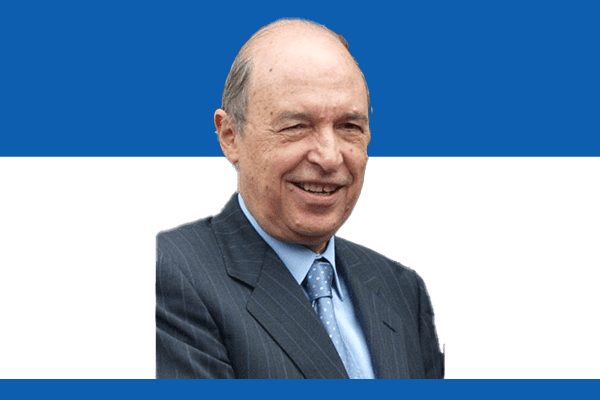
Early Life and Education
Konstantinos Simitis was born on June 23, 1936, in Piraeus, Greece. He grew up in an intellectually active family, which influenced his interest in politics and law. He studied law at the University of Athens and later continued his education in Germany, where he specialized in legal and economic studies.
He built a strong academic career as a university professor before fully entering politics. His exposure to European political systems helped him develop a reform-oriented mindset. Instead of following purely ideological approaches, he focused on practical solutions to national challenges.
Entry into Politics
Simitis actively opposed authoritarian rule during the period of military dictatorship in Greece (1967–1974). After democracy was restored, he became a founding member of the Panhellenic Socialist Movement (PASOK), led by Andreas Papandreou.
He held several ministerial positions, including Minister of Agriculture and Minister of National Economy. In these roles, he implemented policies that promoted economic restructuring and modernization. His competence and reformist outlook gradually distinguished him within the party.
Prime Ministership
In 1996, Konstantinos Simitis became Prime Minister following the resignation of Andreas Papandreou. He quickly established himself as a leader focused on modernization and European integration. His government introduced structural reforms aimed at stabilizing the economy and improving public administration.
One of his most significant achievements was guiding Greece into the Eurozone in 2001. He actively worked to meet the economic criteria required for adopting the euro, strengthening Greece’s position within the European Union. His leadership also contributed to the successful preparation of the 2004 Athens Olympic Games, showcasing Greece on the global stage.
Policies and Achievements
Simitis emphasized economic discipline, infrastructure development, and administrative reform. His government invested heavily in transportation projects, including highways, airports, and urban transit systems. These developments improved connectivity and supported economic growth.
He promoted transparency and attempted to reduce corruption, although challenges persisted. He also supported Greece’s role in regional stability, particularly in the Balkans, and strengthened diplomatic relations within Europe.
Rather than relying on populist rhetoric, Simitis used a results-driven approach. He encouraged innovation, modernization, and alignment with European standards in governance and policy.
Challenges and Criticism
Despite his achievements, Simitis faced criticism for economic inequalities and social dissatisfaction. Some citizens felt that his reforms favored economic indicators over social welfare. Additionally, allegations of corruption within the broader political system affected public perception, even when he personally maintained a reputation for integrity.
His government also encountered resistance from groups affected by economic restructuring. Balancing modernization with social equity remained a persistent challenge during his tenure.
Legacy and Influence
Konstantinos Simitis left a lasting impact on Greece’s political and economic landscape. He transformed the country into a more modern European state and strengthened its institutional framework. His leadership style influenced future policymakers who sought to combine reform with stability.
After leaving office in 2004, he remained active in intellectual and political discussions, contributing ideas on governance and European integration. His work continues to shape debates about Greece’s development and its role in Europe.
Conclusion
Konstantinos Simitis stands as a key figure in Greece’s transition into a modern European nation. Through active leadership and reform-oriented policies, he advanced economic stability and international cooperation. His legacy reflects both the achievements and complexities of modernization in a changing political environment.