Mr. Franz Jonas
In Office: 9 June 1965 – 24 April 1974
Political Party: Social Democratic Party
Home State: Floridsdorf
Lifespan: 1899–1974
Country: Austria
Image credits available here.
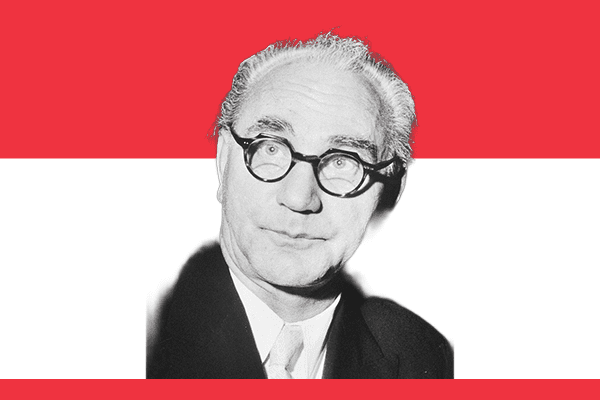
Early Life and Education
Franz Jonas was born on October 4, 1899, in Vienna, Austria. He grew up in a working-class family, which shaped his understanding of social and economic challenges. Instead of following an elite academic path, he trained as a typesetter and became actively involved in labor movements.
He joined the Social Democratic Party at a young age and participated in political activities that aimed to improve workers’ rights. His early experiences in trade unions and journalism helped him develop communication skills and a deep understanding of political organization.
Political Career
Franz Jonas built his political career step by step through dedication and active participation. After World War II, he contributed to rebuilding Austria’s democratic institutions. He served as a member of the Vienna City Council and later became Mayor of Vienna in 1951.
As mayor, Jonas focused on urban development, housing, and public welfare. He improved infrastructure and strengthened social services in Vienna. Citizens appreciated his approachable nature and practical leadership style. Instead of distancing himself from the public, he maintained direct contact with people, which increased his popularity.
Presidency (1965–1974)
In 1965, Franz Jonas became the President of Austria. During his presidency, he actively promoted national unity and represented Austria on the international stage. Although the Austrian president holds largely ceremonial powers, Jonas carried out his duties with sincerity and responsibility.
He supported democratic values and encouraged political stability. He worked closely with the government while respecting constitutional boundaries. His presidency coincided with a period of economic growth and social development in Austria.
Jonas also strengthened Austria’s international relations. He welcomed foreign leaders and promoted Austria’s neutral position during the Cold War. His efforts helped maintain Austria’s image as a peaceful and cooperative nation.
Personal Life
Franz Jonas lived a simple and disciplined life. He married Margarete Jonas, and the couple maintained a low-profile lifestyle. Despite holding high office, he stayed connected to his roots and avoided extravagance.
People often described him as modest, honest, and approachable. He preferred straightforward communication and valued integrity in public service. His personality made him widely respected among citizens.
Leadership Style and Contributions
Franz Jonas demonstrated a practical and people-oriented leadership style. He focused on solving real problems rather than engaging in political showmanship. He believed in equality, social justice, and democratic participation.
He contributed significantly to Vienna’s development as mayor and later ensured continuity and stability as president. His leadership strengthened trust in public institutions. He represented the working class at the highest level of government, which inspired many citizens.
Legacy
Franz Jonas left behind a legacy of humility, service, and democratic commitment. He showed that dedication and hard work could lead to the highest office in the country. His presidency symbolized stability during a time of global tension.
Austria remembers him as a leader who valued simplicity and honesty. His contributions to urban development and national unity continue to influence Austrian society. His life story serves as an example of how ordinary individuals can achieve extraordinary impact through determination.
Conclusion
Franz Jonas played a crucial role in Austria’s political history. Through active leadership and strong values, he helped shape a stable and democratic nation. His journey from a working-class background to the presidency remains inspiring and significant.