AUSTRIA
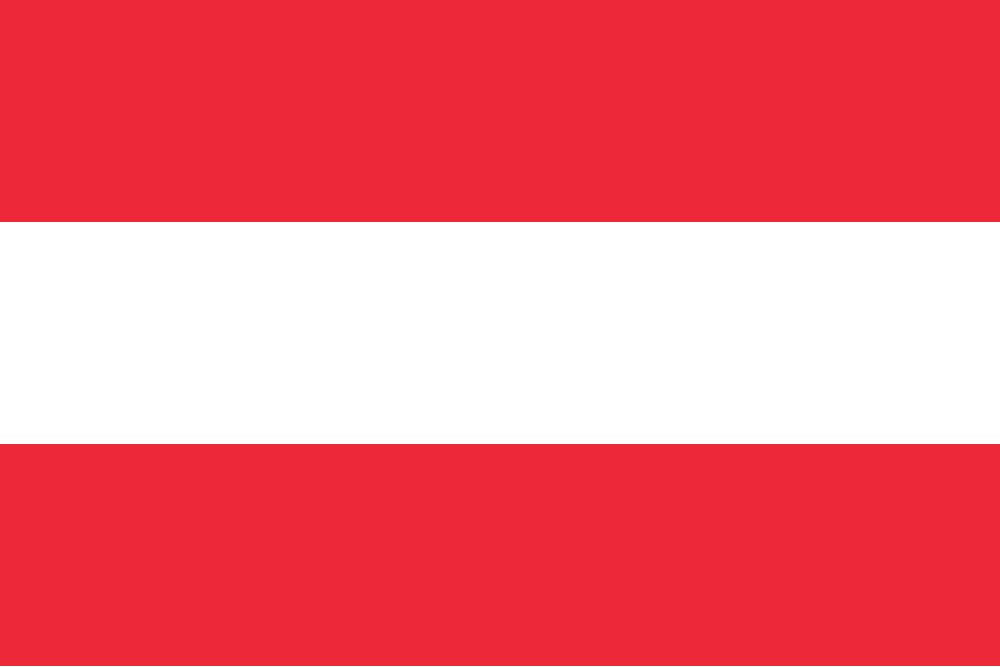
Austria flag
The national flag of Austria consists of three equal horizontal stripes: red, white, and red. It is one of the oldest national flags in the world and dates back to the 13th century. According to legend, the white stripe appeared on Duke Leopold V’s blood-stained tunic after battle. The red color symbolizes strength and bravery, while white represents peace and honesty. Austria officially adopted the modern version of the flag in 1945 after World War II, and it remains a proud national symbol today.
Introduction
Austria is a beautiful country located in Central Europe. It is famous for its rich history, stunning Alpine mountains, classical music, and high quality of life. Austria shares borders with Germany, Switzerland, Italy, Hungary, Slovakia, Slovenia, Liechtenstein, and the Czech Republic. The capital city is Vienna, which is also the country’s largest and most important cultural center.
History of Austria
Austria has a long and fascinating history. In the past, it was the center of the powerful Habsburg Empire, which ruled large parts of Europe for many centuries. During the 18th and 19th centuries, became one of Europe’s strongest kingdoms. The Austro-Hungarian Empire played an important role in European politics until its collapse after World War I in 1918.
After World War II, Austria rebuilt itself into a peaceful and prosperous democratic nation. Today, it is a member of the European Union and maintains good relations with countries around the world.
Geography and Climate
The famous for the Alps mountains, which cover a large part of the country. These mountains make a popular destination for skiing, hiking, and winter sports. The country also has beautiful lakes, rivers, forests, and valleys.
experiences a temperate climate with cold winters and warm summers. Snowfall in the mountain regions attracts millions of tourists every year. The natural beauty of Austria is one of its greatest attractions.
Culture and Tourism
Austria has a rich cultural heritage. It is the birthplace of famous composers such as Wolfgang Amadeus Mozart and Franz Schubert. Classical music, opera, and art are important parts of Austrian culture.
Tourists from around the world visit Austria to explore historic palaces, museums, and scenic landscapes. Popular tourist attractions include Schönbrunn Palace, Hofburg Palace, and the beautiful city of Salzburg.
food is also well known. Traditional dishes such as Wiener Schnitzel and apple strudel are enjoyed by both locals and visitors.
Economy and Modern Austria
Austria has a strong and stable economy based on industries, tourism, trade, and technology. The country provides excellent healthcare, education, and public services. Austria is also active in environmental protection and renewable energy development.