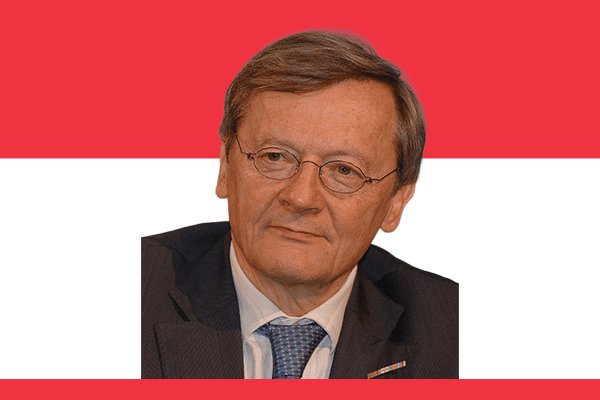
Early Life and Education
Wolfgang Schüssel was born on June 7, 1945, in Vienna, Austria. He grew up in a period marked by post-World War II reconstruction, which shaped his understanding of politics and national development. He studied law at the University of Vienna and earned a doctorate degree in 1968. His academic background gave him strong analytical and communication skills that later supported his political career.
Before entering national politics, Schüssel worked in economic organizations and gained experience in public administration. He focused on economic growth, trade, and cooperation, which later became important themes in his political leadership.
Entry into Politics
Wolfgang Schüssel joined the Austrian People’s Party (ÖVP) and quickly rose through its ranks. He demonstrated strong organizational skills and gained recognition as an effective political strategist. In the 1980s, he became a member of the Austrian parliament and actively participated in policy discussions.
During the late 1980s and 1990s, Schüssel served in several ministerial positions, including Minister of Economic Affairs and Minister of Foreign Affairs. As foreign minister, he represented Austria internationally and supported European cooperation. He strengthened Austria’s diplomatic relations and promoted the country’s active role in the European Union.
Chancellor of Austria
In 2000, Wolfgang Schüssel became Chancellor of Austria after forming a coalition government. His leadership attracted international attention because his coalition included the Freedom Party of Austria. Despite criticism from some European countries, Schüssel defended his government and emphasized democratic processes.
As chancellor, he introduced economic and administrative reforms aimed at modernizing Austria. He reduced government spending, restructured pension systems, and encouraged economic competitiveness. His government promoted privatization and supported business development to strengthen Austria’s economy.
Schüssel also focused on education and technological advancement. He encouraged innovation and sought to prepare Austria for the challenges of globalization. Through active policymaking, he attempted to increase efficiency within public institutions and improve long-term economic stability.
European and International Role
Wolfgang Schüssel strongly supported European integration. During Austria’s presidency of the Council of the European Union in 2006, he worked to strengthen cooperation among European nations. He promoted dialogue on economic growth, security, and regional stability.
He also played a role in expanding Austria’s international influence. By engaging actively in diplomatic discussions, Schüssel increased Austria’s visibility within European politics. His leadership style combined pragmatism with strategic planning, which earned him recognition across the continent.
Political Challenges and Criticism
Like many influential leaders, Schüssel faced criticism during his political career. Opponents questioned some of his economic reforms and coalition decisions. Critics argued that certain policies increased social inequality, while supporters believed his reforms improved Austria’s competitiveness and financial stability.
Despite political controversies, Schüssel remained an influential figure in Austrian politics. He defended his policies confidently and maintained a strong presence in public debates. His ability to navigate complex political situations demonstrated his experience and determination.
Legacy and Influence
Wolfgang Schüssel left a lasting impact on Austria’s political and economic system. His reforms shaped public administration, economic policy, and Austria’s role within Europe. Many political analysts regard him as one of Austria’s most influential chancellors of the modern era.
His leadership reflected a commitment to modernization and active governance. Even after leaving office in 2007, Schüssel continued to contribute to public discussions and international organizations. His political career remains an important chapter in Austrian history.
Conclusion
Wolfgang Schüssel played a significant role in shaping modern Austria through active leadership and reform-driven policies. As chancellor, he promoted economic modernization, European cooperation, and institutional reform. His influence continues to be recognized in Austrian and European political history.