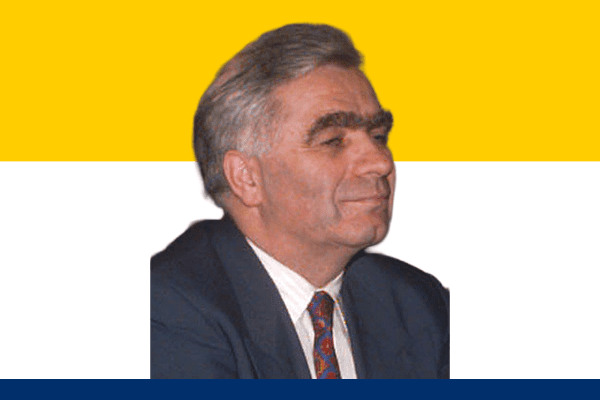
Mr. Momcilo Krajisnik
In Office: 5 October 1996 – 13 October 1998
Political Party: Serb Democratic Party
Home State: Sarajevo
Lifespan: 1945–2020
Country: Bosnia and Herzegovina
Image credits available here.
Early Life and Education
Momčilo Krajišnik was born on 20 January 1945 in the village of Zabrđe, near Sarajevo, in what was then Yugoslavia. He completed his education in economics and worked in several economic institutions before entering politics. During his early career, he gained experience in administration and financial management, which later helped him in public service.
Political Career
Krajišnik entered politics as Yugoslavia experienced political instability in the late 1980s. He became a leading member of the Serbian Democratic Party (SDS), which represented the interests of Bosnian Serbs. As tensions increased among different ethnic communities, he emerged as an important political figure.
In 1991, he became the Speaker of the Assembly of the Republika Srpska, the political entity established by Bosnian Serb leaders. During the Bosnian War (1992–1995), he worked closely with other Bosnian Serb leaders and participated in making important political decisions. His leadership influenced military and governmental policies throughout the conflict.
Role During the Bosnian War
The Bosnian War was one of the most devastating conflicts in Europe after the Second World War. During this period, Krajišnik held a senior political position within the Bosnian Serb leadership. International organizations later alleged that the Bosnian Serb leadership pursued policies that resulted in the forced displacement of non-Serb populations from many areas.
His political role became the subject of international investigations after the war ended. Prosecutors argued that he participated in policies connected to ethnic persecution and deportation, while his defense maintained that his actions were political rather than criminal.
Trial and Conviction
In 2000, Momčilo Krajišnik was arrested and transferred to the International Criminal Tribunal for the former Yugoslavia (ICTY) in The Hague, Netherlands. He faced charges that included crimes against humanity and war crimes.
After a lengthy trial, the ICTY found him guilty of several crimes against humanity, including persecution, deportation, and forced transfer of civilians. The court determined that he had contributed to a joint criminal enterprise aimed at permanently removing non-Serb populations from certain territories. He was sentenced to imprisonment. Some charges were dismissed or overturned during the appeals process, but the conviction for crimes against humanity remained in effect.
Krajišnik served most of his prison sentence in the United Kingdom before his early release in 2013 after completing a substantial portion of his sentence.
Later Life and Death
After his release, Krajišnik returned to Bosnia and Herzegovina. He remained active in public discussions and occasionally commented on political issues affecting the region. His return generated mixed reactions, with some people supporting him while others criticized his past actions.
Momčilo Krajišnik died on 15 September 2020 in Banja Luka after complications related to COVID-19. He was 75 years old.
Legacy
Momčilo Krajišnik remains one of the most controversial figures in the history of the Balkans. Supporters view him as a political representative of Bosnian Serbs during a difficult period, while critics emphasize his conviction for crimes against humanity and the suffering experienced during the Bosnian War.
Historians continue to examine his political career within the broader context of the breakup of Yugoslavia. His life illustrates how political leadership during times of conflict can have profound and lasting consequences. Today, his legacy serves as a reminder of the importance of accountability, justice, and reconciliation in post-conflict societies.