LITHUANIA
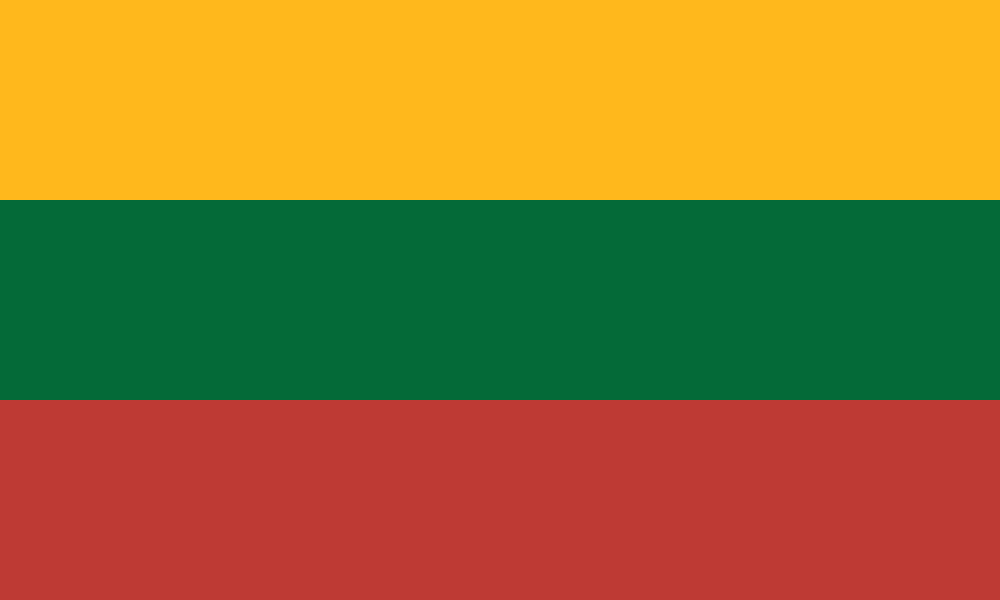
Lithuania flag
The Lithuania flag is a horizontal tricolor featuring yellow, green, and red stripes of equal size. Adopted on 20 March 1989, it represents the nation’s history, culture, and aspirations. Yellow symbolizes sunshine, prosperity, and hope. Green stands for forests, nature, freedom, and vitality. Red represents the courage, sacrifice, and patriotism of those who fought for Lithuania’s independence. The simple yet meaningful design reflects national pride, unity, resilience, and the enduring spirit of the Lithuanian people.
Lithuania
Lithuania is a beautiful country located in the Baltic region of Northern Europe. It is known for its rich history, stunning natural landscapes, vibrant culture, and strong national identity. Lithuania shares borders with Latvia to the north, Belarus to the east and south, Poland to the southwest, and Russia to the west. The country also has a coastline along the Baltic Sea. Lithuania’s capital city, Vilnius, is famous for its well-preserved medieval Old Town, which is recognized as a UNESCO World Heritage Site.
Geography and Climate
Lithuania covers an area of approximately 65,300 square kilometers, making it the largest of the three Baltic countries. The landscape consists of flat plains, rolling hills, forests, rivers, and lakes. More than one-third of the country is covered by forests, providing a habitat for diverse wildlife. Lithuania experiences a humid continental climate with warm summers and cold winters. The changing seasons make the country attractive throughout the year.
History
Lithuania has a long and fascinating history. During the Middle Ages, it was one of Europe‘s largest and most powerful states as part of the Grand Duchy of Lithuania. In 1569, it entered into a union with Poland, forming the Polish–Lithuanian Commonwealth. After periods of foreign rule, Lithuania declared independence in 1918. It was later occupied during the Second World War and became part of the Soviet Union. On March 11, 1990, Lithuania became the first Soviet republic to declare the restoration of its independence.
Government and Economy
Lithuania is a democratic republic with a president serving as the head of state and a prime minister leading the government. The country has a stable economy based on manufacturing, technology, agriculture, services, and exports. Lithuania adopted the euro as its official currency in 2015. It is also a member of the European Union, NATO, and the United Nations.
Culture and Traditions
Lithuanian culture is deeply rooted in its traditions, language, music, and folklore. The Lithuanian language is one of the oldest living Indo-European languages. Traditional festivals, folk dances, and handcrafted artworks remain an important part of everyday life. Popular dishes include cepelinai (potato dumplings), rye bread, and cold beet soup.
Tourism
Lithuania offers many attractions for visitors. Popular destinations include the historic streets of Vilnius, the coastal city of Klaipėda, the scenic Curonian Spit, and the impressive Trakai Island Castle. Tourists enjoy exploring museums, castles, forests, lakes, and national parks.
Conclusion
Lithuania is a modern European nation that successfully blends its rich historical heritage with innovation and economic growth. Its natural beauty, cultural traditions, welcoming people, and strong commitment to democracy make it an important country in the Baltic region. Whether for tourism, education, or business, Lithuania continues to attract people from around the world.