POLAND
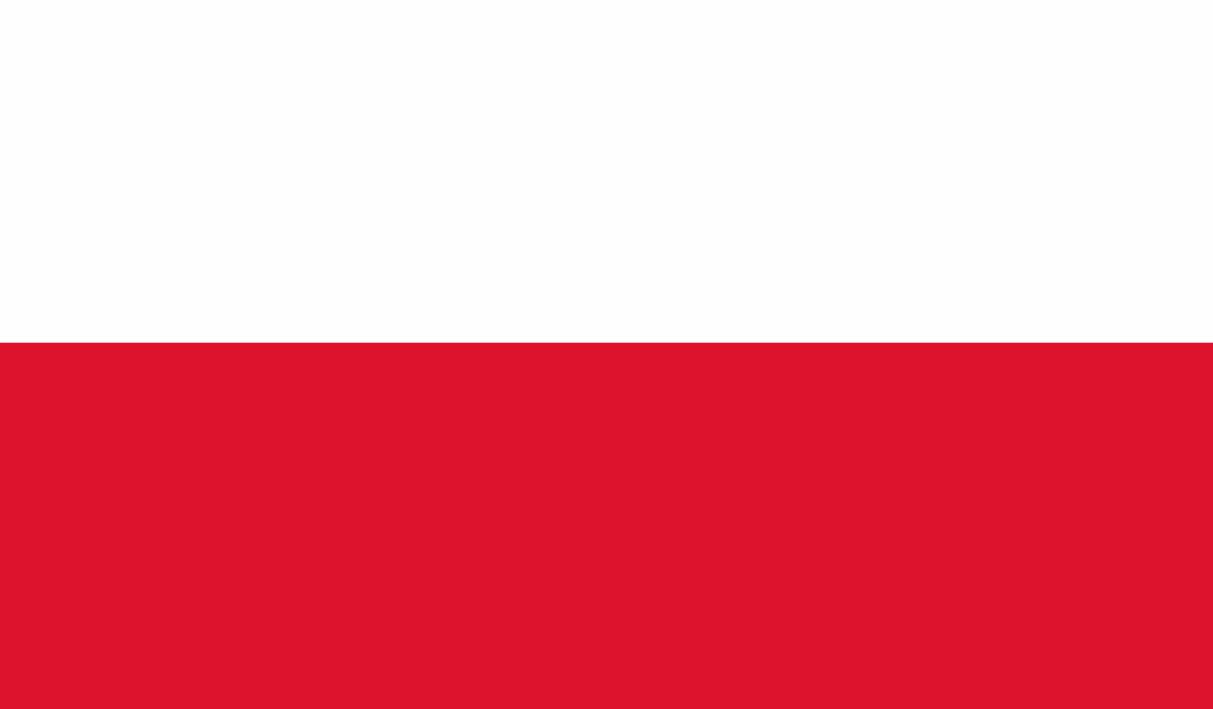
Poland flag
The national flag of Poland consists of two horizontal stripes of equal size. The top stripe is white, and the bottom stripe is red. These colors have historical and symbolic meanings: white represents peace and purity, while red symbolizes courage and the blood shed for independence. The design is simple yet powerful, reflecting Poland’s national identity. The flag was officially adopted in 1919, shortly after Poland regained independence following World War I, and remains a strong symbol of patriotism.
Introduction
Poland is a Central European nation known for its rich history, resilient culture, and strategic location between Eastern and Western Europe. Over the centuries, it has experienced periods of great power, partitions, and rebirth, shaping a strong national identity. Today, Poland is a democratic country and an important member of international organizations such as the European Union and NATO.
Geography and Population
Poland lies in Central Europe and shares borders with Germany, the Czech Republic, Slovakia, Ukraine, Belarus, Lithuania, and Russia (Kaliningrad region). Its capital and largest city, Warsaw, is the political, economic, and cultural hub of the country. Poland’s landscape is diverse, featuring plains, mountains such as the Carpathian Mountains, and a coastline along the Baltic Sea. The country has a population of around 38 million people, making it one of the most populous nations in the European Union.
History
Poland’s history dates back over a thousand years, beginning with the establishment of the Polish state in the 10th century under rulers like Mieszko I. The Polish–Lithuanian Commonwealth once became one of Europe’s largest and most powerful states. However, in the late 18th century, Poland was partitioned by neighboring powers and disappeared from the map for over a century. It regained independence in 1918 after World War I. During World War II, Poland suffered immense devastation, particularly under Nazi occupation, with major tragedies such as the Holocaust. After the war, Poland fell under communist rule until 1989, when democratic reforms led to the establishment of a modern republic.
Economy and Development
Poland has one of the fastest-growing economies in Europe. Since transitioning from communism to a market economy, it has experienced steady economic growth. Key industries include manufacturing, agriculture, information technology, and services. Poland is known for exporting machinery, vehicles, and agricultural products. Its integration into the European Union has significantly boosted trade and infrastructure development.
Culture and Society
Polish culture is deeply rooted in traditions, literature, music, and religion. Roman Catholicism plays a significant role in society. Poland has produced world-renowned figures such as Frédéric Chopin and Marie Curie. Traditional festivals, cuisine like pierogi, and folk customs remain important aspects of daily life. Polish society values education, family, and national heritage.
Conclusion
In conclusion, Poland stands as a country that has overcome historical challenges to emerge as a stable and influential European nation. With its strong economy, vibrant culture, and strategic importance, Poland continues to play a vital role on the global stage while preserving its unique identity.