CYPRUS
Cyprus Flag
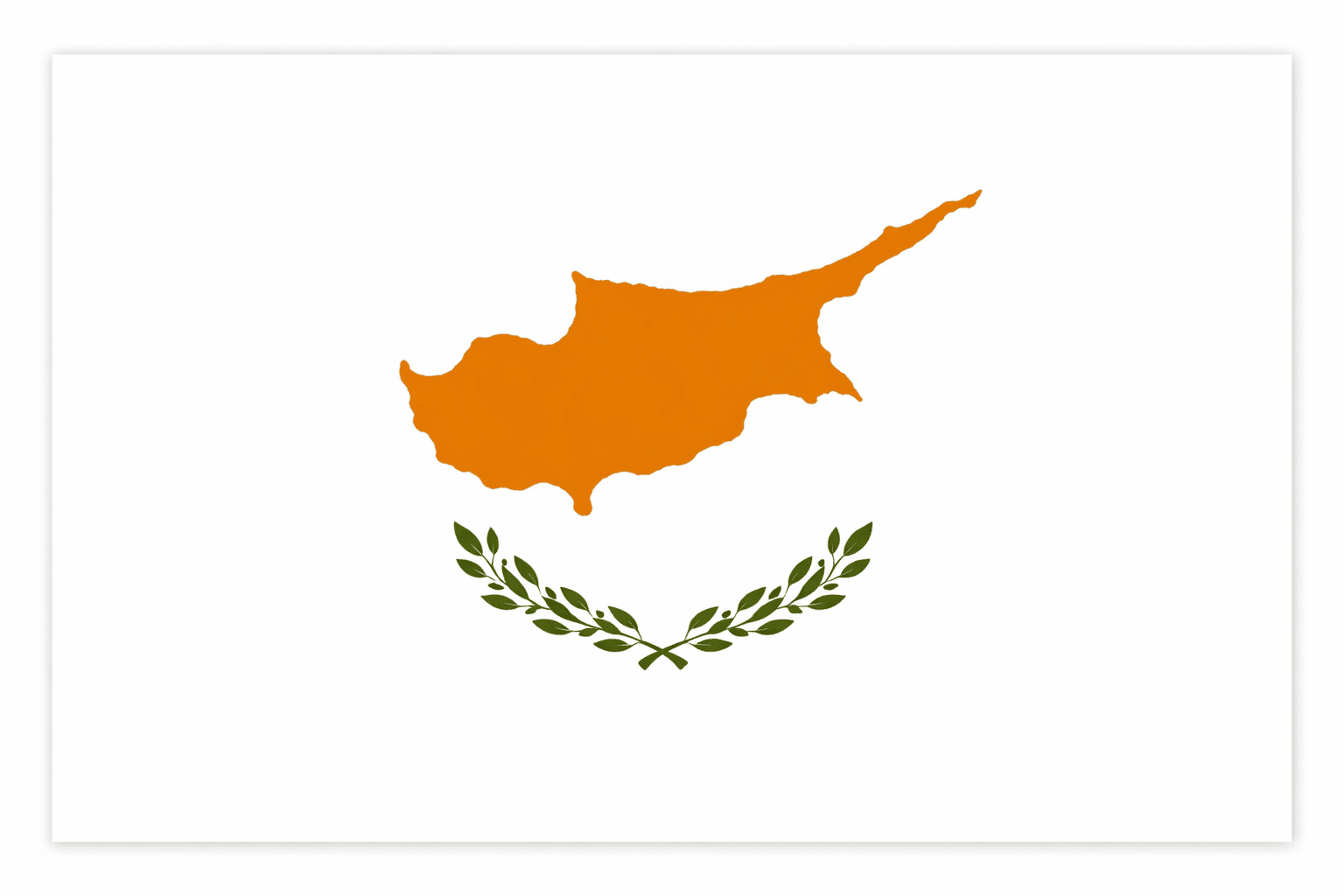
The flag of Cyprus is simple and meaningful. It has a white background, showing peace and neutrality. In the center, there is a copper-orange map of the island of Cyprus, representing the country itself and its historic copper resources. Below the map are two green olive branches, symbolizing peace and unity between the Greek Cypriot and Turkish Cypriot communities. The flag was officially adopted in 1960 when Cyprus became independent. It is one of the few national flags in the world to display a map of the country.
Introduction
Cyprus is an island country located in the eastern Mediterranean Sea, at the crossroads of Europe, Asia, and Africa. Because of its strategic location, Cyprus has been influenced by many civilizations throughout history, including the Greeks, Romans, Byzantines, Ottomans, and the British. Today, the country is known for its rich cultural heritage, beautiful beaches, historic ruins, and warm Mediterranean climate. The capital city is Nicosia, which is also the largest city on the island. Cyprus gained independence from Britain in 1960 and later became a member of the European Union in 2004.
Geography and Climate
Cyprus is the third-largest island in the Mediterranean Sea, after Sicily and Sardinia. The island features a diverse landscape that includes sandy beaches, fertile plains, and mountain ranges. The Troodos Mountains are located in the central and western parts of the island and are home to forests, traditional villages, and historic monasteries. Cyprus enjoys a Mediterranean climate, meaning it has hot, dry summers and mild, wet winters. This pleasant climate attracts many tourists every year.
History
Cyprus has a long and complex history that dates back thousands of years. The island was once famous for its copper resources, which even influenced its name. Over the centuries, Cyprus was ruled by several powers including the Byzantine Empire, Venetians, and the Ottoman Empire. In 1878, Britain took control of the island and later made it a colony. Cyprus became an independent republic in 1960. However, tensions between the Greek Cypriot and Turkish Cypriot communities led to conflict, and since 1974 the island has been divided into two parts.
Economy and Culture
Cyprus has a developed economy based mainly on tourism, financial services, shipping, and trade. Tourism is one of the most important industries because the island attracts millions of visitors each year who come for its beaches, resorts, and historical sites. The culture of Cyprus reflects a mix of Greek and Turkish traditions, along with influences from other Mediterranean civilizations. Traditional foods, music, festivals, and architecture highlight the island’s diverse cultural heritage.
Conclusion
In conclusion, Cyprus is a country with a rich history, strategic location, and vibrant culture. Despite political divisions, it remains an important economic and tourist center in the Mediterranean region. Its natural beauty, ancient landmarks, and welcoming atmosphere continue to make Cyprus a fascinating place for visitors and historians alike.