MOLDOVA
Moldova Flag
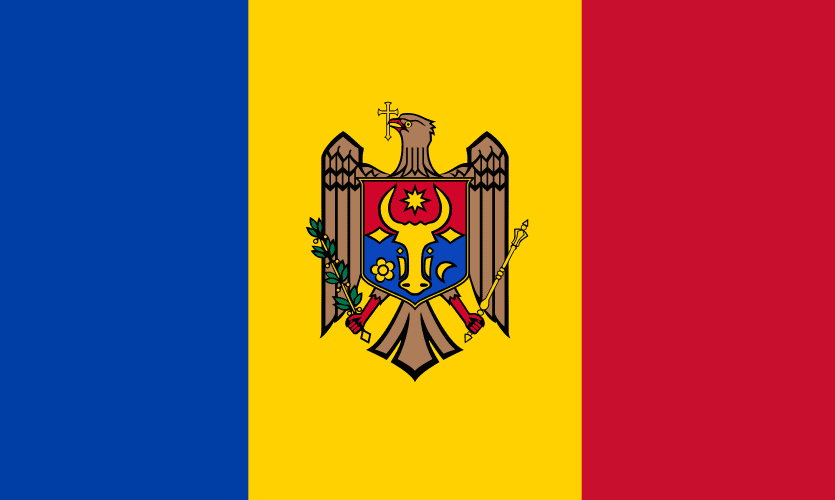
The Moldova flag is a vertical tricolour of blue, yellow, and red, with the national coat of arms centered on the yellow stripe. The blue symbolizes the sky, freedom, and loyalty, the yellow represents prosperity and justice, and the red stands for courage and the sacrifices made for independence. The coat of arms features an eagle holding a cross, an olive branch, and a scepter, with a shield displaying an aurochs’ head, reflecting Moldova’s history, sovereignty, and national identity.
Moldova
Moldova is a small, landlocked country located in Eastern Europe. It is bordered by Romania to the west and Ukraine to the north, east, and south. Despite its modest size, Moldova has a rich cultural heritage, beautiful countryside, and a long history influenced by various civilizations. The country’s capital and largest city is Chișinău, which serves as its political, economic, and cultural center.
History
Moldova has a fascinating history dating back to ancient times. It was once part of the medieval Principality of Moldavia. Over the centuries, the region came under the control of different empires, including the Ottoman Empire and the Russian Empire. During the 20th century, Moldova became part of the Soviet Union as the Moldavian Soviet Socialist Republic. On August 27, 1991, Moldova declared its independence following the dissolution of the Soviet Union. Since then, the country has worked to strengthen its democracy and economy while maintaining its national identity.
Geography and Climate
Moldova covers an area of approximately 33,846 square kilometers. The country is known for its rolling hills, fertile plains, forests, and numerous rivers. The Dniester River is one of the country’s most important waterways. Moldova experiences a moderate continental climate, with warm summers and cold winters. Its fertile soil makes agriculture one of the country’s most significant industries.
Economy
Agriculture plays a vital role in Moldova’s economy. The country is well known for producing grapes, fruits, vegetables, sunflower seeds, and grains. Moldova is especially famous for its wine industry, with vineyards covering large areas of the countryside. In recent years, sectors such as information technology, manufacturing, and services have also contributed to economic growth. The government continues to encourage foreign investment and improve infrastructure to support development.
Culture and Tourism
Moldovan culture reflects influences from Romanian, Slavic, and other European traditions. Folk music, dance, and colorful festivals remain an important part of daily life. Visitors enjoy exploring historical monasteries, traditional villages, and world-famous underground wine cellars such as Cricova Winery and Milestii Mici. Local cuisine features delicious dishes prepared with fresh vegetables, meat, cheese, and homemade bread.
Conclusion
Moldova is a peaceful nation with a rich history, fertile landscapes, and vibrant cultural traditions. Although it faces economic and political challenges, the country continues to develop while preserving its unique heritage. With its welcoming people, renowned vineyards, and scenic beauty, Moldova remains an interesting destination for travelers and an important part of Eastern Europe.