PALESTINE
Palestine Flag
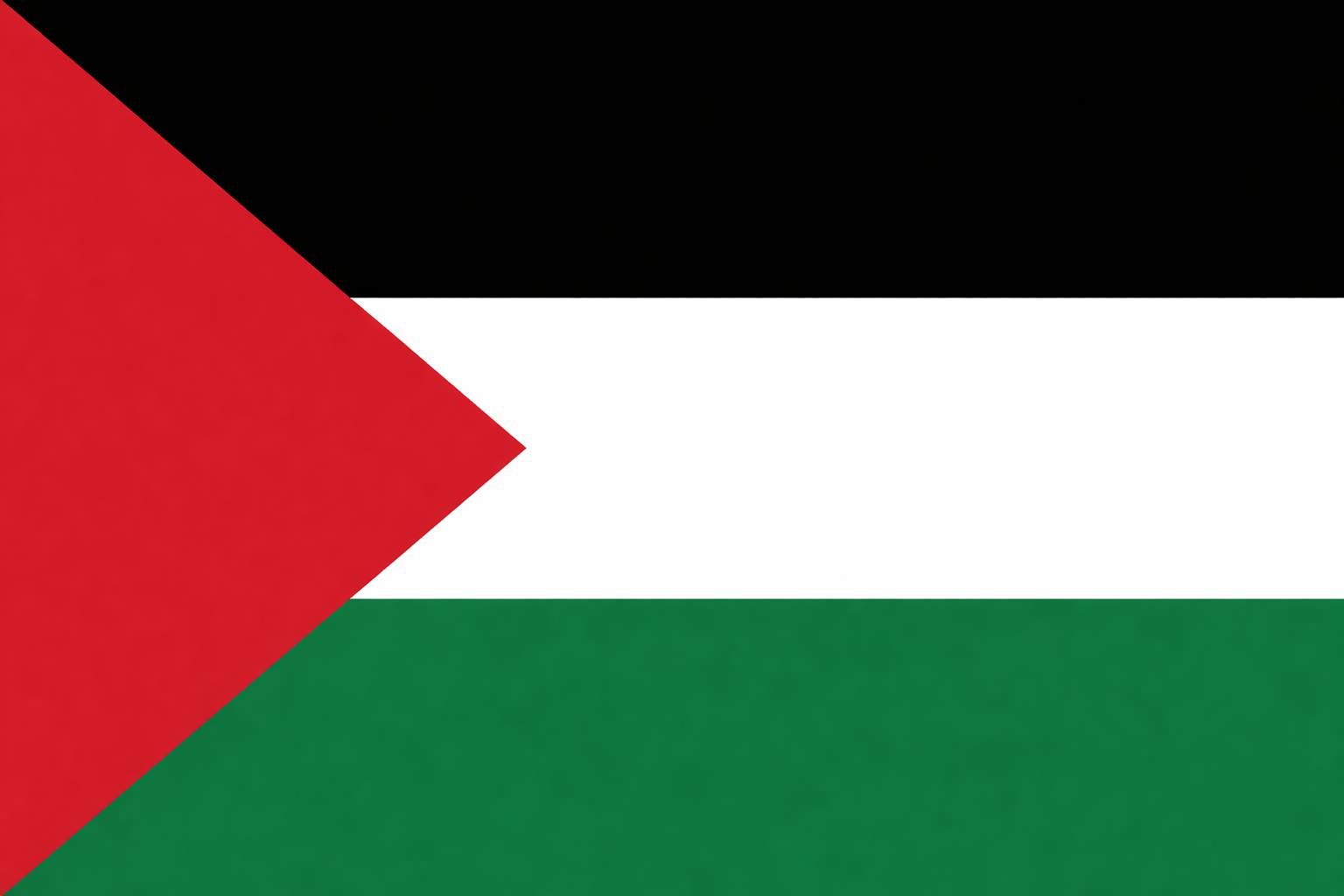
The Palestine flag has four colors: black, white, green, and red. It consists of three horizontal stripes—black on top, white in the middle, and green at the bottom. On the left side, there is a red triangle pointing toward the center. These colors are known as Pan-Arab colors and represent Arab unity and history. The flag symbolizes the struggle, identity, hope, and independence of the Palestinian people and their national pride.
Palestine: History, Geography, and Political Significance
Palestine is a region in the Middle East that holds deep historical, cultural, and political importance. It is located on the eastern coast of the Mediterranean Sea and includes two main territories: the West Bank and the Gaza Strip. Palestine is bordered by Israel, Jordan, and Egypt. Its claimed capital is Jerusalem, a city sacred to Muslims, Christians, and Jews.
Historical Background
Palestine has one of the oldest histories in the world, dating back thousands of years. It has been ruled by many civilizations, including the Egyptians, Romans, Byzantines, and Ottomans. After World War I, Palestine came under British control through the British Mandate. In 1947, the United Nations proposed dividing the land into two states, one Jewish and one Arab. This led to the creation of Israel in 1948 and caused conflict, resulting in many Palestinians becoming refugees.
Geography and Population
The West Bank is a landlocked area with hills and fertile valleys, while the Gaza Strip is a small coastal region along the Mediterranean Sea. Palestine has a population of over 5 million people. Most Palestinians are Arabs, and the main language is Arabic. Islam is the dominant religion, although there is also a small Christian minority.
Government and Leadership
Palestine is governed by the Palestinian Authority, which was established in 1994 following peace agreements with Israel. The political system includes a president and a prime minister. Major political groups include Fatah, which mainly controls the West Bank, and Hamas, which governs Gaza. Political divisions between these groups have created challenges for unity.
Economy and Living Conditions
Palestine’s economy depends on agriculture, small industries, and international aid. Olives, fruits, and vegetables are major crops. However, the economy faces difficulties due to restrictions, conflict, and limited resources. Unemployment rates are high, especially in Gaza. Many Palestinians rely on support from international organizations.
International Recognition and Importance
Palestine is recognized as a state by more than 130 countries and holds observer state status at the United Nations. However, its full sovereignty remains limited due to the ongoing conflict with Israel. Palestine remains a central issue in global politics, especially in discussions about peace in the Middle East.
Conclusion
Palestine is a land rich in history and cultural heritage. Despite political challenges and conflict, Palestinians continue to maintain their identity and hope for an independent and peaceful state. The future of Palestine remains closely connected to international diplomacy and regional stability.