TAJIKISTAN
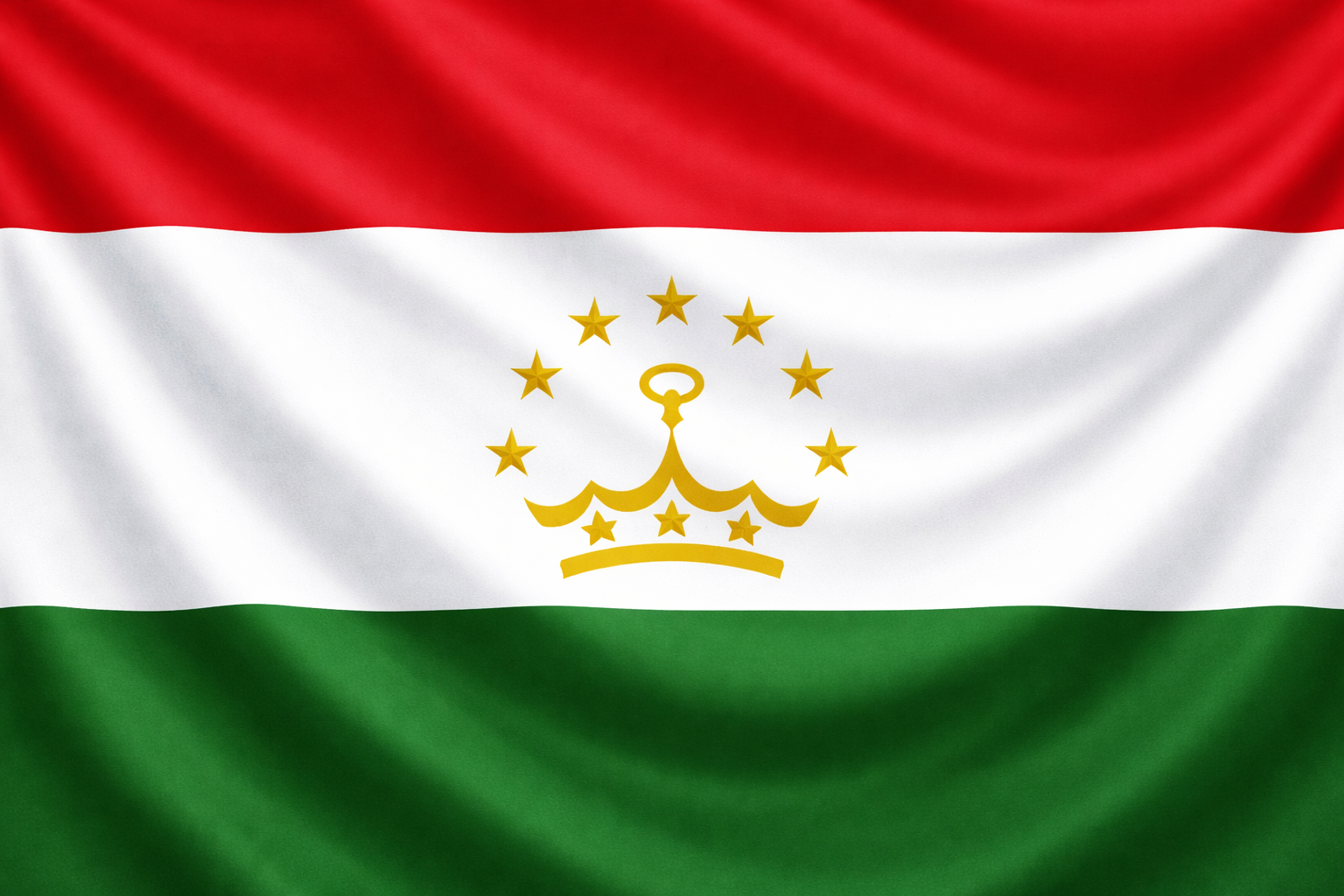
Tajikistan Flag
The flag of Tajikistan features three horizontal stripes of red, white, and green. The red stripe at the top represents unity, courage, and the struggle for independence. The white middle stripe symbolizes purity, peace, and the country’s cotton production. At its center is a golden crown with seven stars, reflecting sovereignty and national pride. The green bottom stripe stands for agriculture, fertility, and prosperity. The flag expresses Tajikistan’s history, culture, and hopes for progress.
Tajikistan: A Land of Mountains, History, and Cultural Heritage
Tajikistan is a landlocked country located in Central Asia, bordered by Afghanistan to the south, Uzbekistan to the west, Kyrgyzstan to the north, and China to the east. It is the smallest nation in Central Asia by area, yet it possesses a rich history, striking natural landscapes, and a deeply rooted cultural identity. Known for its towering mountains and ancient traditions, Tajikistan holds a unique place in the region.
Geography and Natural Landscape
More than 90 percent of Tajikistan’s territory is mountainous, making it one of the most rugged countries in the world. The Pamir Mountains, often called the “Roof of the World,” dominate the eastern part of the country and attract climbers, researchers, and adventure travelers. Tajikistan is also home to glaciers, deep valleys, and fast-flowing rivers, including the Vakhsh and Panj rivers, which play a vital role in agriculture and hydroelectric power generation. The country’s climate varies from hot summers in the lowlands to harsh, cold winters in the high mountain regions.
History and Heritage
Tajikistan’s history stretches back thousands of years and is closely linked to ancient Persian civilization. The Tajik people are considered descendants of Persian-speaking populations of Central Asia. Over centuries, the region experienced the rule of various empires, including the Achaemenids, Greeks under Alexander the Great, Arab, Mongols, and Timurids. In the modern era, Tajikistan became part of the Soviet Union in 1929 and gained independence in 1991 following the collapse of the USSR. The early years of independence were marked by a civil war, but the country gradually moved toward stability.
Culture and Language
Tajik culture reflects strong Persian roots blended with Central Asian influences. Tajik, a variety of the Persian language, is the official language and is widely spoken across the country. Poetry, music, and storytelling hold an important place in society, with classical Persian poets such as Rudaki highly respected. Traditional clothing, colorful embroidery, and festive celebrations highlight the cultural richness of the Tajik people. Islam is the predominant religion, shaping social values and daily life.
Economy and Development
Tajikistan’s economy largely depends on agriculture, remittances from migrant workers, and hydropower. Cotton remains a major crop, while fruits and vegetables support rural livelihoods. The country has significant potential for hydroelectric energy due to its abundant rivers. Despite economic challenges, Tajikistan continues to invest in infrastructure, energy projects, and regional cooperation to improve living standards.
Conclusion
Tajikistan is a country of dramatic landscapes, ancient history, and resilient people. Its mountains, cultural heritage, and strategic location make it an important part of Central Asia. As Tajikistan continues its path of development, it remains deeply connected to its traditions while looking toward a more stable and prosperous future.