Abdul Rahman
Reign: 31 August 1957 – 1 April 1960
Coronation: 2 September 1957
Home State: Seri Menanti
Lifespan: 1895 – 1960
Country: Malaysia
Image credits available here.
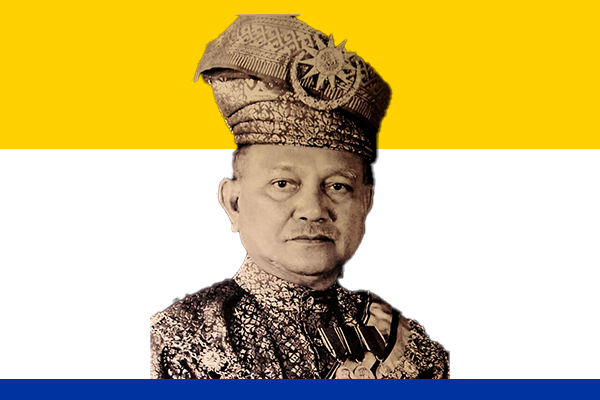
Early Life and Royal Background
Tuanku Abdul Rahman was born on 24 August 1895 in Negeri Sembilan into the royal family of the state. He belonged to a lineage deeply rooted in Malay customs and the unique Adat Perpatih system practiced in Negeri Sembilan. From a young age, he received education that balanced traditional Malay values with modern administrative knowledge. This upbringing prepared him for leadership and gave him a strong sense of responsibility toward his people.
Role as Yang di-Pertuan Besar of Negeri Sembilan
Before becoming King of Malaysia, Tuanku Abdul Rahman served as the Yang di-Pertuan Besar of Negeri Sembilan. In this role, he earned respect for his approachable nature and fairness. He worked closely with community leaders and upheld customary laws while adapting to changing political realities. His leadership at the state level demonstrated his ability to balance tradition with progress, a skill that later proved vital at the national level.
First Yang di-Pertuan Agong of Malaysia
In 1957, following Malaya’s independence, Tuanku Abdul Rahman was elected as the first Yang di-Pertuan Agong. This historic moment symbolized unity among the Malay rulers and the birth of a constitutional monarchy. His installation represented stability during a time of major transition. As King, he acted as a unifying figure above politics, safeguarding the constitution and supporting democratic governance.
Leadership During Independence
During the early years of independence, King Tuanku Abdul Rahman played a crucial ceremonial and moral role. He worked with the government to ensure smooth administration and national cohesion. His calm presence reassured citizens and international observers alike. He emphasized harmony among Malaysia’s diverse communities and promoted respect for the rule of law.
Legacy and Historical Significance
King Tuanku Abdul Rahman passed away on 1 April 1960, but his legacy remains enduring. As the first Yang di-Pertuan Agong, he set the standards of integrity, neutrality, and service that future kings would follow. He is remembered not only as a monarch but as a symbol of unity at the dawn of a new nation. His contribution to Malaysia’s political stability and national identity continues to be honored in the country’s history.
Conclusion
King Tuanku Abdul Rahman’s life and reign reflect the values of leadership, unity, and dedication to national service. As Malaysia’s first King, he guided the nation through its formative years and left a lasting imprint on its constitutional monarchy.