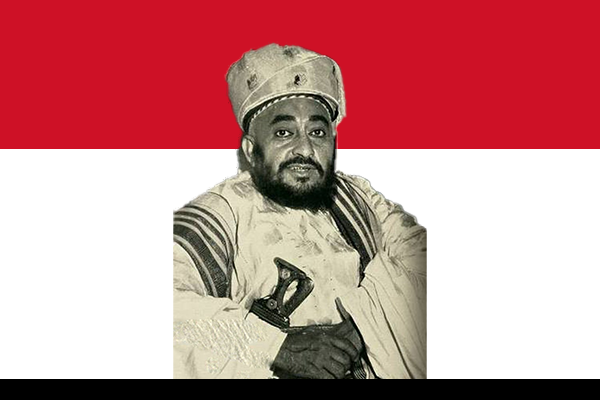
Early Life and Background
King Ahmad bin Yahya Hamidaddin was born in 1891 into the Hamidaddin dynasty, which ruled the Mutawakkilite Kingdom of Yemen. He was the son of Imam Yahya Muhammad Hamidaddin, the founder of the modern Yemeni imamate. Raised in a deeply religious and traditional environment, Ahmad received education in Islamic theology, jurisprudence, and governance. From an early age, he showed a strong personality, sharp intelligence, and an uncompromising attitude toward authority, traits that would later define his rule.
Rise to Power
After the assassination of Imam Yahya in 1948 during a failed constitutional revolt, Ahmad bin Yahya moved quickly to secure power. He crushed the rebellion with decisive force and declared himself Imam and King of Yemen. His accession marked the continuation of dynastic rule and the rejection of constitutional reforms demanded by intellectuals and reformists. Ahmad viewed strong centralized authority as essential for Yemen’s survival in a hostile regional and global environment.
Style of Governance
King Ahmad ruled Yemen with an iron hand. He maintained absolute authority and relied heavily on tribal alliances, religious legitimacy, and military strength. Suspicious of opposition, he closely monitored officials, scholars, and tribal leaders. He frequently changed governors to prevent them from building independent power bases. His governance style earned him the reputation of being authoritarian, but it also ensured internal stability during a period of regional upheaval.
Domestic Policies and Society
Ahmad bin Yahya resisted rapid modernization, fearing that it would weaken traditional values and his control over the state. While limited infrastructure projects were introduced, such as roads and basic institutions, Yemen largely remained isolated. Education and healthcare progressed slowly, and social life stayed deeply conservative. Critics accused him of holding Yemen back from development, while supporters argued that he protected the country from foreign domination and cultural erosion.
Foreign Relations and Anti-Colonial Stance
One of King Ahmad’s most significant roles was his opposition to colonial powers. He strongly resisted British influence in southern Yemen and supported anti-colonial movements in the region. During the Cold War, he skillfully balanced relations with different global powers, including the Soviet Union and Arab nationalist states, to preserve Yemen’s independence. His foreign policy reflected pragmatism, using international rivalries to Yemen’s advantage.
Challenges and Opposition
Despite his firm control, opposition to Ahmad’s rule steadily grew. Intellectuals, military officers, and reformists criticized his authoritarianism and resistance to reform. Several assassination attempts were made against him, highlighting deep internal discontent. Although he survived these challenges, they revealed growing pressure for political change within Yemeni society.
Death and Legacy
King Ahmad bin Yahya died in 1962, ending a dramatic and influential reign. His death directly preceded the Yemeni Revolution of 1962, which abolished the monarchy and established the Yemen Arab Republic. Historically, Ahmad remains a complex figure. Some view him as a tyrant who suppressed progress, while others regard him as a strong leader who defended Yemen’s sovereignty in a difficult era.
Historical Significance
King Ahmad bin Yahya’s reign represents the final phase of Yemen’s traditional monarchical system. His leadership left a lasting imprint on Yemeni politics, shaping the tensions between tradition and modernity that continue to influence the country’s history.