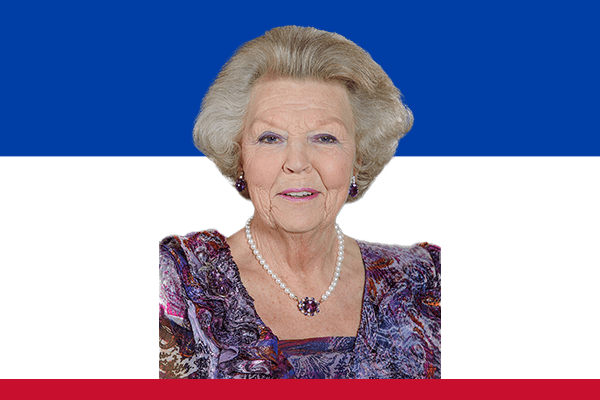
Beatrix
Reign: 30 April 1980 – 30 April 2013
Home State: Soestdijk Palace
Lifespan: born – 1938
Country: Netherlands
Image credits available here.
Early Life and Education
Beatrix Wilhelmina Armgard was born on January 31, 1938, into the Dutch royal family. She spent part of her childhood in exile during World War II, as her family moved to Canada to escape Nazi occupation. This early experience influenced her understanding of global politics and human resilience.
After returning to the Netherlands, she pursued higher education at Leiden University. She studied law, sociology, and political science, which helped her develop a strong foundation for her future responsibilities. Her academic background shaped her thoughtful and informed decision-making style.
Ascension to the Throne
Beatrix became queen in 1980 after her mother, Queen Juliana, abdicated the throne. The transition marked a new era for the Dutch monarchy. Beatrix approached her role with seriousness and professionalism. She focused on strengthening the monarchy’s relevance in a modern democratic society.
She maintained a more formal style compared to her mother, which helped reinforce the dignity and authority of the royal institution. Her leadership style emphasized discipline, responsibility, and careful planning.
Role and Contributions
Queen Beatrix actively participated in state affairs and worked closely with government officials. She reviewed legislation, met with political leaders, and represented the Netherlands at international events. She promoted unity and stability within the country.
She also supported numerous social causes. She encouraged cultural development, education, and international cooperation. Her speeches often addressed important social issues, including integration, tolerance, and national identity.
During her reign, the Netherlands experienced significant economic and social changes. Beatrix provided continuity and reassurance during times of transformation. She remained a symbol of national unity and pride.
Personal Life
Beatrix married Claus von Amsberg in 1966. Although their marriage initially faced public opposition due to his German background, the couple gradually gained widespread acceptance. Prince Claus became a beloved figure in the Netherlands.
The couple had three sons: Willem-Alexander, Friso, and Constantijn. Beatrix balanced her royal duties with her role as a mother. She maintained a strong sense of family values and responsibility.
Abdication and Legacy
In 2013, Queen Beatrix abdicated the throne in favor of her eldest son, Willem-Alexander. Her decision reflected a tradition in Dutch monarchy, where rulers step down to allow a new generation to lead.
Her reign lasted 33 years and left a lasting impact on the Netherlands. She strengthened the monarchy’s role in a modern society and maintained its relevance in changing times. Her dedication, intelligence, and sense of duty earned admiration from people around the world.
Conclusion
Queen Beatrix remains one of the most respected figures in Dutch history. She led with strength, wisdom, and commitment. Her reign demonstrated how a constitutional monarch can contribute positively to a nation’s development. Her legacy continues to inspire future generations and uphold the values of leadership and service.