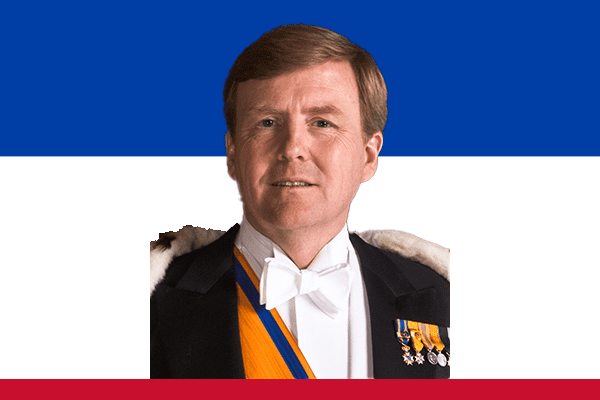
Willem-Alexander
Reign: 30 April 2013 – present
Home State: Utrecht
Lifespan: born – 1967
Country: Netherlands
Image credits available here.
Early Life and Education
Willem-Alexander completed his primary and secondary education in the Netherlands and later studied history at Leiden University. He gained valuable insights into governance, international relations, and Dutch society during his academic years. He also underwent military training and served in the Royal Netherlands Navy, which helped him develop discipline and leadership skills. These experiences prepared him to assume the responsibilities of kingship with confidence and understanding.
Role as King
Willem-Alexander became king on April 30, 2013, after his mother, Queen Beatrix, abdicated the throne. He actively participates in state affairs and represents the Netherlands at home and abroad. As a constitutional monarch, he works within the framework of a parliamentary democracy, where the government holds executive power. However, he plays a significant ceremonial and unifying role, promoting national identity and stability. He regularly meets with government officials, signs legislation, and supports diplomatic relations with other countries.
Personal Life
Willem-Alexander married Queen Máxima in 2002. Queen Máxima, originally from Argentina, has become a beloved figure in Dutch society due to her warmth and commitment to social causes. The royal couple has three daughters: Catharina-Amalia, the heir to the throne; Princess Alexia; and Princess Ariane. Together, they represent a modern royal family that balances tradition with contemporary values.
Contributions and Interests
King Willem-Alexander takes a strong interest in water management, a crucial issue for the Netherlands due to its low-lying geography. He has worked with international organizations to address global water challenges and promote sustainable solutions. He also supports various social and cultural initiatives, including sports, education, and environmental conservation. His approachable personality and willingness to engage with citizens have strengthened his connection with the Dutch people.
Leadership Style and Impact
Willem-Alexander leads with a modern and practical approach. He encourages openness, innovation, and unity within society. His reign reflects a shift toward a more accessible monarchy, where the king maintains closer contact with citizens. He actively participates in public events and shows genuine interest in people’s concerns. This approach has enhanced the relevance of the monarchy in a rapidly changing world.
Conclusion
King Willem-Alexander has established himself as a capable and forward-thinking monarch. He fulfills his duties with dedication while adapting to contemporary expectations. Through his leadership, he continues to strengthen the unity and international presence of the Netherlands. His commitment to service, combined with his modern outlook, ensures that the Dutch monarchy remains an important and respected institution.