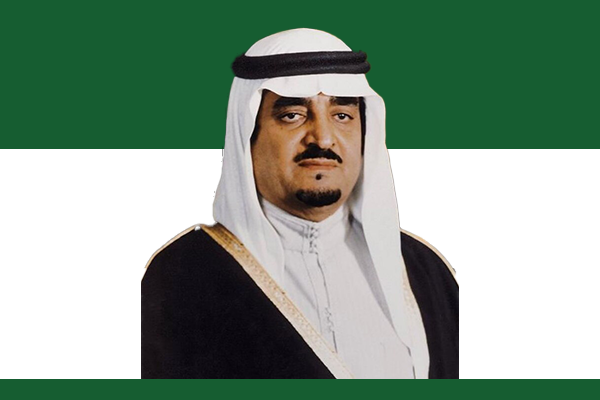
Fahd
Reign: 13 June 1982 – 1 August 2005
Coronation: 13 June 1982
Home State: Riyadh
Lifespan: 1920 – 2005
Country: Saudi Arabia
Image credits available here.
Early Life and Education
King Fahd bin Abdulaziz Al Saud was born in 1921 in Riyadh, Saudi Arabia. He grew up in the household of King Abdulaziz, the founder of the Kingdom, who personally guided his early education. King Fahd studied religious teachings, Arabic language, and modern administrative skills, which prepared him for future leadership. From a young age, he demonstrated intelligence, discipline, and a deep understanding of governance. His exposure to both traditional Islamic values and modern political ideas shaped his balanced leadership style.
Entry into Politics and Leadership Roles
King Fahd entered public service early and took on key responsibilities during the formative years of Saudi Arabia. He served as Minister of Education in 1953 and laid the foundation for a modern education system. Under his leadership, the Kingdom expanded schools, introduced structured curricula, and encouraged higher education. Later, he served as Minister of Interior and played a vital role in strengthening national security and administrative efficiency. These positions allowed him to gain deep experience in governance and state affairs.
Accession to the Throne
King Fahd became the King of Saudi Arabia in 1982 after the passing of King Khalid. Upon assuming the throne, he focused on national stability, economic growth, and modernization. He adopted the title “Custodian of the Two Holy Mosques,” reflecting his deep commitment to Islam and the protection of Makkah and Madinah. This title strengthened Saudi Arabia’s religious standing in the Muslim world and emphasized his role as a guardian of Islamic heritage.
Economic and Infrastructure Development
King Fahd led large-scale development projects that transformed Saudi Arabia’s infrastructure. He expanded highways, airports, seaports, and industrial cities. His government invested heavily in oil revenues to diversify the economy and improve public services. He strengthened healthcare by building modern hospitals and medical institutions across the Kingdom. These efforts raised the standard of living and supported long-term economic stability.
Educational and Social Reforms
Education remained a top priority during King Fahd’s reign. He supported universities, research institutions, and scholarship programs for Saudi students abroad. His policies helped create a skilled workforce capable of managing modern industries. King Fahd also promoted social welfare programs that improved housing, employment opportunities, and public utilities. Through these reforms, he balanced tradition with progress while maintaining cultural and religious values.
Role in Regional and International Affairs
King Fahd played an active role in regional and global politics. He supported Arab unity and worked toward peaceful solutions to conflicts in the Middle East. During the Gulf War, he took decisive action to protect Saudi Arabia’s sovereignty and regional security. His diplomatic approach strengthened alliances and reinforced Saudi Arabia’s position as a key global energy supplier and political leader in the Islamic world.
Health Challenges and Final Years
In the mid-1990s, King Fahd faced serious health issues that limited his public activities. Despite these challenges, the Kingdom maintained political stability under his leadership framework. He passed away in 2005 after ruling for more than two decades. His reign marked one of the most transformative periods in Saudi history.
Legacy of King Fahd
King Fahd left behind a legacy of modernization, stability, and development. He transformed Saudi Arabia into a modern state while preserving its Islamic identity. His vision shaped the Kingdom’s institutions and laid the groundwork for future reforms. Today, people remember King Fahd as a decisive leader who guided Saudi Arabia through a crucial era of change.