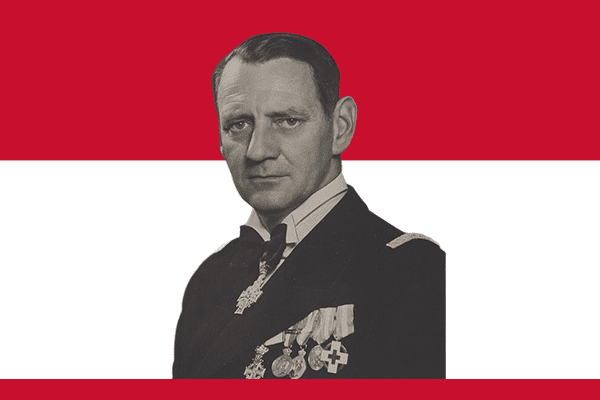
Frederik IX
Reign: 20 April 1947 – 14 January 1972
Home State: Sorgenfri Palace
Lifespan: 1899–1972
Country: Denmark
Image credits available here.
Early Life and Education
Frederik IX was born on March 11, 1899, at Sorgenfri Palace in Denmark. He was the eldest son of King Christian X and Queen Alexandrine. From a young age, Frederik received education in history, politics, and languages to prepare for royal responsibilities.
He also developed a strong interest in military service. Instead of relying only on royal traditions, Frederik actively trained in the Danish Navy and built a successful naval career. His military experience helped him connect with ordinary citizens and strengthened his leadership skills.
Military Career and Leadership
Frederik IX became known for his dedication to the navy. He studied at the Royal Danish Naval Academy and later served in several naval positions. Through discipline and hard work, he earned respect among military officers and citizens alike.
During World War II, Denmark faced German occupation. Frederik and the royal family stood beside the Danish people during this difficult period. Although Denmark experienced political challenges, Frederik’s calm and patriotic presence inspired national unity and hope.
Ascension to the Throne
In 1947, Frederik IX became King of Denmark after the death of his father, King Christian X. As king, he focused on strengthening the relationship between the monarchy and the public. He often appeared among ordinary people and showed genuine interest in their lives.
Unlike distant monarchs of earlier centuries, Frederik embraced a modern and approachable image. He traveled across Denmark, attended public events, and supported social causes. His active involvement increased the popularity of the monarchy.
Family and Personal Life
In 1935, Frederik married Princess Ingrid of Sweden, who later became Queen Ingrid of Denmark. Their marriage strengthened ties between Denmark and Sweden and attracted great public interest.
The couple had three daughters: Margrethe, Benedikte, and Anne-Marie. Since Denmark’s succession laws originally allowed only males to inherit the throne, Frederik worked to change the law. In 1953, Denmark approved a constitutional amendment that allowed women to inherit the throne. This change made Princess Margrethe the heir apparent, and she later became Queen Margrethe II.
Frederik IX enjoyed music, sailing, and spending time with his family. His simple lifestyle and warm personality helped citizens feel closer to the royal family.
Contributions to Denmark
Frederik IX played an important role in modernizing Denmark during the post-war period. Under his reign, Denmark expanded its welfare system, improved education, and strengthened economic growth. Although the king held mainly ceremonial powers, he encouraged unity and national pride.
He also represented Denmark internationally through diplomatic visits and cultural events. His leadership helped maintain stability during periods of social change in Europe.
Frederik supported arts and culture and encouraged the preservation of Danish traditions. At the same time, he accepted modernization and encouraged progress within society.
Legacy and Death
King Frederik IX passed away on January 14, 1972. His death deeply saddened the Danish people because many considered him a symbol of kindness, stability, and national unity.
After his death, his daughter became Margrethe II, the first female monarch of Denmark in many centuries. Frederik’s efforts to modernize succession laws made this historic transition possible.
Today, Danes remember Frederik IX as a compassionate and hardworking king who strengthened the bond between the monarchy and the people. His reign left a lasting impact on Denmark’s political and cultural history.
Conclusion
King Frederik IX dedicated his life to serving Denmark with honesty, humility, and determination. Through active leadership, military service, and modernization efforts, he transformed the Danish monarchy into a more modern and people-centered institution. His legacy continues to inspire respect and admiration across Denmark.