Margrethe II
Reign: 14 January 1972 – 14 January 2024
Home State: Amalienborg
Lifespan: born–1940
Country: Denmark
Image credits available here.
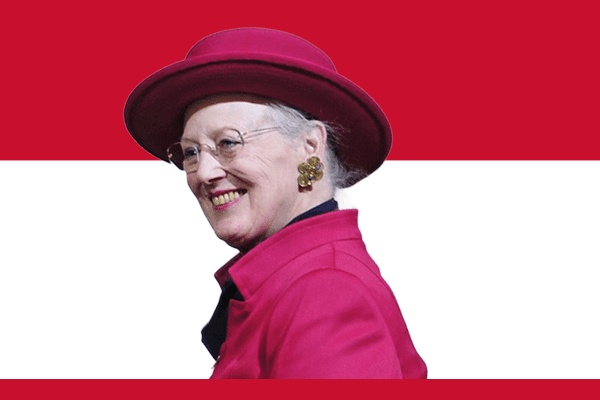
Early Life and Education
Margrethe II was born on April 16, 1940, in Copenhagen, Denmark. Her parents were King Frederik IX and Queen Ingrid. At the time of her birth, Danish law did not allow women to inherit the throne. However, the Danish constitution changed in 1953, making Margrethe the heir apparent.
She received an excellent education and studied at several prestigious universities. She attended the University of Copenhagen, the University of Aarhus, the Sorbonne in Paris, and the London School of Economics. Through these studies, she developed deep knowledge of politics, archaeology, philosophy, and history. She also trained in military and diplomatic affairs to prepare for royal duties.
Ascension to the Throne
Margrethe II became Queen of Denmark on January 14, 1972, after the death of her father, King Frederik IX. Thousands of citizens gathered to welcome their new queen. During her first public speech as monarch, she promised to dedicate her life to Denmark and its people.
Unlike absolute monarchs of the past, Margrethe II served as a constitutional monarch. She did not create laws or govern politically. Instead, she represented national unity, tradition, and stability. She carried out ceremonial duties, attended official events, and welcomed foreign leaders on behalf of Denmark.
Leadership and Contributions
Queen Margrethe II modernized the Danish monarchy while preserving important traditions. She maintained close connections with the Danish people and regularly traveled throughout the country. Her warm personality and sense of humor increased public admiration for the royal family.
She actively promoted Danish art, culture, and history. Besides fulfilling royal responsibilities, she worked as an accomplished artist and designer. She created illustrations for books, designed costumes for theater productions, and contributed to archaeological research. Her artistic achievements demonstrated her creativity and cultural passion.
Environmental awareness and social responsibility also became important parts of her reign. She supported charitable organizations, educational programs, and cultural institutions. Through public speeches and royal engagements, she encouraged unity and respect within society.
Personal Life
In 1967, Margrethe married Henri de Laborde de Monpezat, who became Prince Henrik of Denmark. Their marriage attracted international attention and symbolized a modern royal partnership. The couple had two sons, Crown Prince Frederik and Prince Joachim.
Crown Prince Frederik later became heir to the throne and prepared for future leadership through education and military service. The royal family maintained strong public visibility and participated in national celebrations, humanitarian causes, and cultural activities.
Abdication and Legacy
In January 2024, Queen Margrethe II surprised the nation by announcing her abdication after 52 years on the throne. She stepped down in favor of her son, who became King Frederik X. Her decision reflected her belief in ensuring stability and continuity for the monarchy.
Margrethe II left behind an extraordinary legacy of dedication and service. She strengthened the popularity of the Danish monarchy and modernized its image for younger generations. Her reign represented stability during periods of social and political change in Europe.
Many people admired her intelligence, artistic talents, and commitment to public duty. She balanced royal traditions with modern values and maintained strong relationships with citizens throughout her reign.
Conclusion
Queen Margrethe II remains one of Denmark’s most influential monarchs. Through active leadership, cultural contributions, and lifelong dedication, she shaped the modern Danish monarchy. Her reign inspired respect across the world and left a lasting impact on Denmark’s national identity.