Haakon VII
Reign: 18 November 1905 − 21 September 1957
Home State: Charlottenlund
Lifespan: 1872–1957
Country: Norway
Image credits available here.
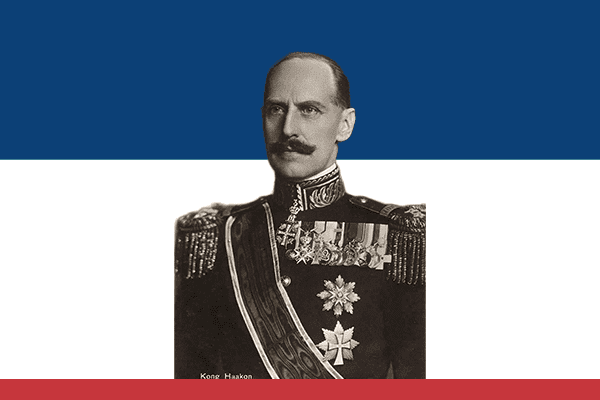
Early Life and Background
Haakon VII was born as Prince Carl of Denmark on August 3, 1872, in Copenhagen. He belonged to the Danish royal family and was the son of Crown Prince Frederick of Denmark and Princess Louise of Sweden. As a young prince, he received a strong education and military training, which prepared him for future leadership roles.
Prince Carl served in the Danish Navy and developed discipline, responsibility, and leadership skills. In 1896, he married Princess Maud of Wales, the daughter of King Edward VII of the United Kingdom. The couple later had one son, Prince Alexander, who became Crown Prince Olav of Norway.
Becoming King of Norway
In 1905, Norway ended its union with Sweden and became an independent nation. The Norwegian government wanted a constitutional monarchy and invited Prince Carl of Denmark to become king. Before accepting the throne, Prince Carl insisted that the Norwegian people should decide through a referendum.
The people strongly supported the monarchy, and Prince Carl accepted the position. He chose the name Haakon VII, an ancient Norwegian royal name, to honor Norway’s history and traditions. His son Prince Alexander received the new Norwegian name Olav.
Haakon VII officially became King of Norway on November 25, 1905. From the beginning of his reign, he worked hard to unite the nation and strengthen democracy.
Leadership and Public Service
King Haakon VII believed in constitutional monarchy and respected the authority of elected leaders. Instead of interfering in politics, he focused on representing the country and supporting national unity. He traveled widely across Norway and connected closely with citizens.
The king promoted Norwegian culture, education, and national pride. His humble personality and dedication earned him great respect among the people. He actively participated in state ceremonies, diplomatic visits, and public events.
Haakon VII also strengthened Norway’s international relationships through diplomacy and cooperation. His leadership helped establish Norway as a stable and respected European nation.
Role During World War II
King Haakon VII became a national hero during World War II. In 1940, Nazi Germany invaded Norway and demanded that the Norwegian government surrender. The king firmly rejected German demands and refused to support the puppet government led by Vidkun Quisling.
Instead of surrendering, Haakon VII stood with the Norwegian government and people. He escaped to Britain with the royal family and continued leading the resistance movement from exile in London.
Through radio broadcasts, the king encouraged Norwegians to remain strong and continue resisting occupation. His speeches inspired hope and unity during one of the darkest periods in Norwegian history.
The king’s refusal to cooperate with Nazi Germany symbolized Norway’s determination to defend freedom and democracy. After the war ended in 1945, he returned to Norway and received a hero’s welcome from the people.
Legacy and Importance
King Haakon VII ruled Norway for more than fifty years and became a symbol of national unity and independence. His courage during World War II strengthened the monarchy’s popularity and deepened the people’s trust in him.
He modernized the royal institution while preserving Norwegian traditions and values. His leadership demonstrated the importance of integrity, democracy, and service to the nation.
Many historians consider Haakon VII one of Norway’s greatest monarchs because he guided the country through both peace and war with wisdom and courage.
Conclusion
King Haakon VII played a crucial role in shaping modern Norway. Through strong leadership, patriotism, and dedication to democracy, he earned lasting respect from the Norwegian people. His actions during World War II made him an enduring symbol of courage and national pride.