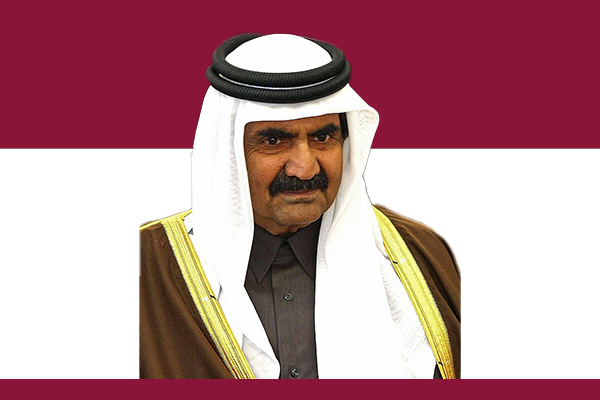
Early Life and Background
Hamad bin Khalifa Al Thani was born on January 1, 1952, in Doha, Qatar. He belongs to the ruling Al Thani family, which has governed Qatar since the 19th century. He completed his early education in Qatar and later attended the Royal Military Academy Sandhurst in the United Kingdom, graduating in 1971. His military education prepared him for leadership roles in the country.
After returning to Qatar, he quickly rose through the ranks and became Commander-in-Chief of the armed forces. In 1977, he was appointed Crown Prince and Minister of Defense by his father, Emir Khalifa bin Hamad Al Thani.
Rise to Power
In 1995, Hamad bin Khalifa Al Thani became Emir after a peaceful palace transition while his father was abroad. His accession marked the beginning of a new era for Qatar. Unlike previous leadership, he focused on modernization, economic diversification, and international engagement.
His leadership style was progressive, and he worked to reduce Qatar’s dependence on oil by developing its natural gas resources.
Economic Transformation
One of Hamad’s greatest achievements was the development of Qatar’s natural gas industry. Under his leadership, Qatar became the world’s largest exporter of liquefied natural gas (LNG). This brought enormous wealth to the country and significantly improved living standards.
He invested heavily in infrastructure, healthcare, and education. Modern cities, roads, airports, and public services were developed during his rule. Qatar’s economy grew rapidly, making it one of the richest countries in the world per capita.
Political and Social Reforms
Hamad bin Khalifa introduced important political reforms. In 2003, he approved a new constitution that allowed limited democratic participation, including elections and the creation of a legislative council.
He also promoted freedom of media by establishing Al Jazeera in 1996, which became one of the most influential news networks in the world. This gave Qatar a powerful voice in global media.
Education was another priority. He supported the creation of Education City, which brought international universities to Qatar and improved higher education opportunities.
International Role and Influence
Under Hamad’s leadership, Qatar became an important player in international diplomacy. The country hosted peace talks, international conferences, and global sporting events.
Qatar also strengthened its relations with major world powers, including the United States and European countries. This increased Qatar’s global importance and influence.
Abdication and Legacy
In 2013, Hamad bin Khalifa Al Thani made a historic decision to step down voluntarily in favor of his son, Sheikh Tamim bin Hamad Al Thani. This peaceful transfer of power was rare in the region and demonstrated his commitment to stability and modernization.
His legacy is remarkable. He transformed Qatar into a modern, wealthy, and globally respected nation. His vision helped shape Qatar’s political system, economy, and international reputation.
Conclusion
Hamad bin Khalifa Al Thani is remembered as a visionary leader who changed the course of Qatar’s history. His reforms, economic policies, and global vision turned Qatar into one of the most successful and influential countries in the Middle East. Even after stepping down, his impact continues to shape Qatar’s future and development.