George VI
Coronation: 12 May 1937
Reign: 11 December 1936 – 6 February 1952
Home State: York Cottage
Lifespan: 1895–1952
Country: New Zealand
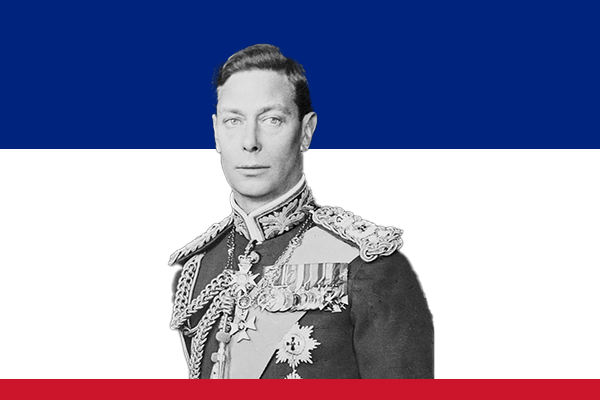
Early Life of King George VI
King George VI was born on December 14, 1895, at York Cottage, Sandringham Estate, in Norfolk, England. His parents, King George V and Queen Mary, named him Albert Frederick Arthur George, but his family fondly called him “Bertie.” He grew up in a royal environment and received education at the Royal Naval College, Osborne, and later at Dartmouth. Despite a stammer that troubled him throughout childhood, he developed resilience and determination, qualities that later defined his reign.
Military Service and Early Responsibilities
During World War I, George VI served in the Royal Navy, actively participating in the Battle of Jutland in 1916. He later joined the Royal Air Force, where he earned his wings as a pilot. His experiences in the military shaped his sense of duty and responsibility. After the war, he carried out royal engagements and supported charitable organizations, gradually preparing for a larger role in public life.
Marriage and Family Life
In 1923, George VI married Lady Elizabeth Bowes-Lyon, who later became Queen Elizabeth, the Queen Mother. The couple created a warm and stable family life, rare for royalty at the time. They had two daughters, Princess Elizabeth (the future Queen Elizabeth II) and Princess Margaret. His devotion to family values won him admiration from the public and set an example for the monarchy.
Accession to the Throne
George VI ascended the throne unexpectedly in December 1936 after his elder brother, King Edward VIII, abdicated to marry Wallis Simpson, an American divorcee. Despite his initial hesitation and speech difficulties, George VI accepted the responsibility with courage. He chose the regnal name George VI to emphasize continuity and stability during a period of uncertainty.
Leadership During World War II
When World War II began in 1939, King George VI became a symbol of national unity. He visited bombed areas, encouraged soldiers, and boosted civilian morale through his speeches. With Prime Minister Winston Churchill, he inspired the British people to stand firm against Nazi Germany. His broadcasts, delivered despite his speech impediment, moved millions and strengthened public confidence in victory.
Post-War Period and Legacy
After the war ended in 1945, George VI guided Britain through post-war recovery and the transition from empire to the Commonwealth of Nations. In 1947, he granted independence to India and Pakistan, marking a major shift in British colonial history. He also witnessed the beginning of the Cold War and supported closer ties among Commonwealth countries.
Final Years and Death
Years of wartime strain affected King George VI’s health. He underwent surgery for lung cancer in 1951 but continued fulfilling his royal duties as much as possible. On February 6, 1952, King George VI passed away at Sandringham, and his daughter, Elizabeth II, succeeded him as queen.
Conclusion
King George VI transformed the British monarchy with his sense of duty, courage, and dedication. He led Britain through its darkest hours, modernized the crown, and left a legacy of resilience and integrity that continues to inspire generations.