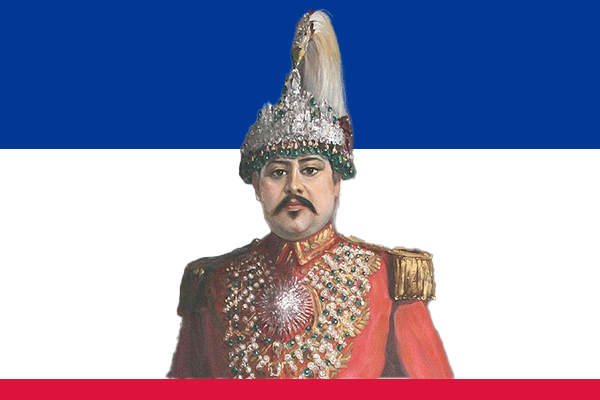
Prithvi Bir Bikram Shah
Coronation: 1 December 1881
Reign: 17 May 1881 – 11 December 1911
Home State: Kathmandu Durbar Square
Lifespan: 1875–1911
Country: Nepal
Early Life and Royal Lineage
King Prithvi Bir Bikram Shah was born in 1875 in Kathmandu, Nepal, into the prestigious Shah dynasty. His father, Crown Prince Trailokya Bir Bikram Shah, was the heir apparent to the throne of Nepal but died before becoming king. After this, young Prithvi became the direct successor to his grandfather, King Surendra Bikram Shah, who ruled Nepal at the time. He grew up in a royal household during a politically complex era. The powerful Rana dynasty had already seized control of the government, limiting the role of the Shah monarchs.
Ascension to the Throne
In 1881, when Prithvi Bir Bikram Shah was only six years old, he ascended the throne after his grandfather died. Although the state crowned him king, the Rana dynasty held the real power. After the Kot Massacre in 1846, the Ranas had taken full control of the government. They reduced the Shah kings to ceremonial figureheads. Throughout Prithvi’s reign, the Rana prime ministers dictated political and administrative decisions, while the king held a symbolic role.
Rana Rule and Limited Power
During his reign, prime ministers like Bir Shumsher Jung Bahadur Rana, Dev Shumsher, and Chandra Shumsher ran the country. They controlled governance, the military, foreign relations, and national policies. As a result, King Prithvi Bir Bikram Shah couldn’t influence state affairs meaningfully. Still, he showed genuine interest in modernization and reform. He promoted education, encouraged health improvements, and supported efforts to develop infrastructure. Although the Rana regime often overshadowed or limited his initiatives, he continued to advocate for progress within his restricted role.
Vision for Modernization
Despite political restrictions, King Prithvi Bir Bikram Shah upheld the dignity of the monarchy. He studied traditional Hindu teachings and royal etiquette but also explored Western ideas of governance and reform. He admired the concept of modernization and sought to introduce it in Nepal. Even though he lacked real authority, he supported the creation of schools and inspired limited reforms that aligned with his vision for a more modern Nepal. His intentions, though symbolic, reflected his desire to see Nepal develop and modernize like other countries in the region.
Legacy and Death
King Prithvi Bir Bikram Shah lived as a monarch during a time when he had no real control over his kingdom. His life illustrates the contradiction of being king in name but not in power. Still, he preserved the cultural and symbolic presence of the Shah dynasty during an era dominated by the Rana regime. He ruled from 1881 until 1911, when he died. His son, Tribhuvan Bir Bikram Shah, succeeded him and continued the royal line.
A Bridge Between Two Eras
King Tribhuvan later led Nepal through a major political transformation. In 1951, he helped end Rana rule and restored democracy to Nepal, reestablishing the active role of the monarchy. Although Prithvi Bir Bikram Shah didn’t lead any major revolutions, his reign bridged the traditional monarchy and the modern era of Nepal. His quiet efforts, symbolic leadership, and dignity helped preserve the institution of the monarchy during a time of suppression and change.