Victoria
Coronation: 28 June 1838
Reign: 20 June 1837 – 22 January 1901
Home State: Kensington Palace
Lifespan: 1819–1901
Country: New Zealand
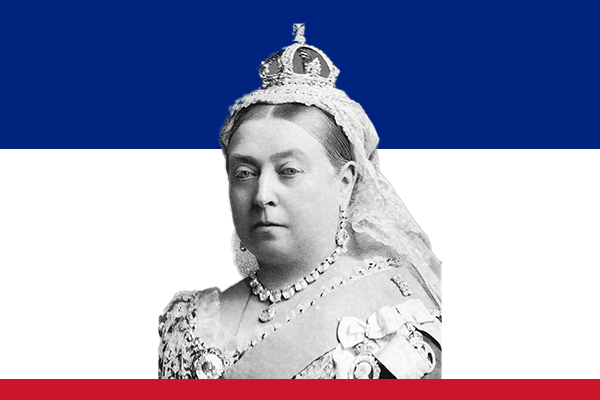
Early Life of Queen Victoria
Queen Victoria was born on May 24, 1819, at Kensington Palace in London. Her father, Prince Edward, Duke of Kent, was the fourth son of King George III. Her mother, Princess Victoria of Saxe-Coburg-Saalfeld, raised her with strict discipline and moral values. When her father passed away in 1820, Victoria grew up under her mother’s close supervision. She studied languages, history, and government, showing intelligence and determination from an early age.
Ascension to the Throne
Victoria became queen on June 20, 1837, after King William IV died without heirs. At just 18 years old, she assumed the throne and brought a fresh spirit to Britain’s monarchy. Her youth and energy inspired hope among the British people. During her coronation in 1838, crowds celebrated her as the new symbol of Britain’s future.
Marriage and Family Life
In 1840, Queen Victoria married her cousin, Prince Albert of Saxe-Coburg and Gotha. Their partnership strengthened the monarchy and influenced British society. Together, they had nine children, who later married into royal families across Europe, earning Victoria the title “Grandmother of Europe.”
Prince Albert supported education, science, and the arts. He guided Victoria on political matters and encouraged industrial progress. His death in 1861 devastated her deeply. She mourned him for the rest of her life but continued to fulfill her royal duties with dedication.
Political and Industrial Developments
Queen Victoria ruled during a time of immense change. The Industrial Revolution transformed Britain’s economy, transportation, and communication systems. Factories, railways, and telegraphs expanded rapidly, making Britain the world’s leading industrial power.
Victoria supported constitutional monarchy, respecting Parliament’s growing authority while maintaining her royal dignity. She met regularly with prime ministers like Lord Melbourne and Benjamin Disraeli, shaping Britain’s political landscape with her opinions and influence.
The British Empire Under Victoria
During Victoria’s reign, the British Empire expanded significantly. Territories in Asia, Africa, and the Pacific came under British control, making Britain a global superpower. In 1876, Prime Minister Benjamin Disraeli made Victoria the Empress of India, highlighting Britain’s imperial strength.
Victoria took pride in the empire but also believed in moral responsibility toward colonial subjects. She promoted education, law, and modernization in the colonies, though critics questioned the empire’s methods and impact.
Cultural and Scientific Achievements
The Victorian Era saw remarkable progress in science, literature, and culture. Writers like Charles Dickens and the Brontë sisters produced classic works, while scientists like Charles Darwin introduced groundbreaking theories.
Queen Victoria encouraged arts and sciences, attending exhibitions like the Great Exhibition of 1851, which showcased Britain’s technological achievements. Her patronage supported architects, painters, and writers who shaped Victorian culture.
Later Years and Legacy
In her later years, Queen Victoria became a symbol of stability and tradition. She celebrated her Golden Jubilee in 1887 and Diamond Jubilee in 1897, marking 50 and 60 years on the throne. These events united Britain and its empire in admiration of her reign.
When Queen Victoria passed away on January 22, 1901, she ended the Victorian Era. Her rule had lasted 63 years, the longest in British history until Queen Elizabeth II surpassed it.
Conclusion
Queen Victoria transformed Britain into a modern, industrial, and global power. She inspired political reforms, supported cultural growth, and strengthened the monarchy’s role in society. Her reign left a lasting legacy on Britain and the world, shaping history for generations.