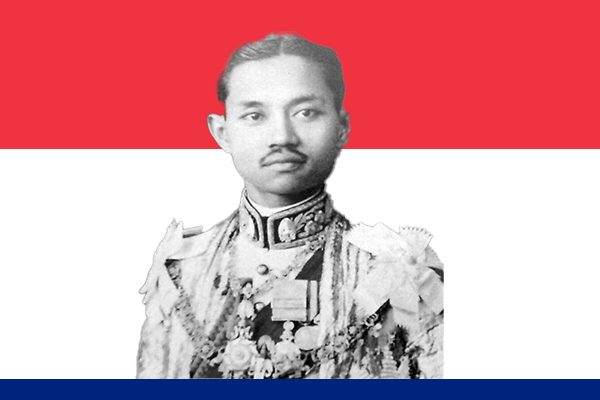
Early Life and Education
King Prajadhipok was born on November 8, 1893, as the youngest son of King Chulalongkorn (Rama V). He received a modern education that shaped his worldview and leadership style. He studied in the United Kingdom, where he trained at Eton College and later at the Royal Military Academy, Woolwich. This exposure to constitutional ideas and Western governance strongly influenced his political thinking. He developed a sense of duty toward the people and understood the importance of accountable government.
Accession to the Throne
King Prajadhipok ascended the throne in 1925 after the death of his elder brother, King Vajiravudh (Rama VI). He did not expect to become king, yet he accepted the responsibility with seriousness and humility. Upon assuming power, he immediately focused on administrative efficiency and financial stability. He reduced royal expenditures, reorganized government departments, and promoted capable officials to manage state affairs more effectively.
Vision for Reform
King Prajadhipok believed Thailand needed gradual political reform to survive in a changing world. He supported the idea of constitutional governance and encouraged discussions on limiting royal power through legal frameworks. He worked closely with advisors to draft proposals for representative institutions. Rather than resisting reform, he sought to guide it carefully, hoping to balance tradition with modernization.
The 1932 Revolution
In 1932, a group of military officers and civil servants carried out a bloodless revolution that ended absolute monarchy in Thailand. King Prajadhipok responded with restraint and wisdom. Instead of ordering suppression, he accepted the new constitutional system to prevent civil conflict. He approved Thailand’s first constitution, marking a historic shift toward democratic governance. His decision demonstrated political maturity and concern for national unity.
Challenges Under Constitutional Rule
Despite accepting constitutional monarchy, King Prajadhipok faced continuous political tension. Conflicts emerged between the monarchy and the new government over authority and governance principles. The king openly expressed concern when leaders ignored democratic values or misused power. He believed that a constitution should protect the people, not merely transfer control from one elite group to another.
Abdication and Later Life
In 1935, King Prajadhipok chose to abdicate the throne. He stepped down to protest unresolved political disputes and the erosion of constitutional principles. He believed abdication served the nation better than remaining in a powerless or symbolic role. After leaving the throne, he lived quietly in the United Kingdom with Queen Rambai Barni. He devoted his remaining years to reflection, writing, and public service activities until his death in 1941.
Legacy and Historical Significance
King Prajadhipok left a profound legacy as a monarch who prioritized the nation over personal power. He guided Thailand through a peaceful transition at a critical moment in history. His commitment to constitutionalism, restraint during crisis, and willingness to sacrifice authority for stability earned him lasting respect. Today, historians remember him as a thoughtful reformer and a symbol of responsible leadership.
Conclusion
King Prajadhipok’s reign marked the end of absolute monarchy and the beginning of modern political life in Thailand. Through courage, compromise, and conscience, he shaped a turning point in the nation’s history. His life continues to inspire discussions on leadership, democracy, and the moral responsibilities of power.