Sisavang Vong
Reign: 23 April 1946 – 29 October 1959
Home State: Luang Prabang
Lifespan: 1904–1945
Country: Laos
Image credits available here.
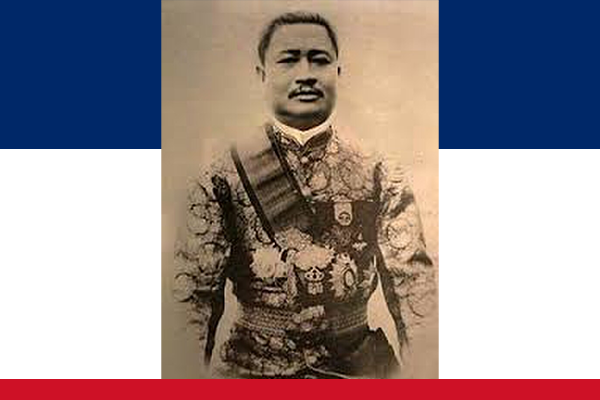
Early Life and Accession to the Throne
Sisavang Vong was born on 14 July 1885 into the royal family of Luang Prabang. He received a traditional royal education combined with exposure to French colonial administration, which later influenced his political outlook. In 1904, he ascended the throne following the death of his father, King Oun Kham. At the time, Laos was under French colonial rule as part of French Indochina, significantly limiting the monarch’s direct authority.
Relationship with French Colonial Administration
Throughout his reign, Sisavang Vong maintained a cooperative relationship with France. Unlike some regional leaders who openly resisted colonial influence, he believed collaboration was the most effective way to preserve the Lao monarchy and ensure internal stability. This approach helped him consolidate power and gradually unify Lao territories that had previously been fragmented.
Although executive authority rested largely with French officials and later with appointed prime ministers, Sisavang Vong remained a central symbolic and political figure. His endorsement was essential for legitimizing administrative decisions, including the appointment of prime ministers under the constitutional framework introduced in the mid-20th century.
Role During World War II
World War II marked a turning point in Sisavang Vong’s reign. When Japan occupied parts of Indochina, Lao nationalists declared independence in 1945. Sisavang Vong, however, initially opposed this move and reaffirmed loyalty to France, believing that sudden independence could destabilize the country.
After the war, France regained control, but political realities were changing. Sisavang Vong adapted to the new environment by supporting constitutional reforms, which introduced the role of Prime Minister while retaining the monarchy as the head of state. This period laid the groundwork for modern Lao governance.
King in a Constitutional System
In 1947, Laos adopted a constitution that transformed the country into a constitutional monarchy. While executive power shifted to elected governments led by prime ministers, Sisavang Vong continued to exert influence through moral authority and political guidance. He served as a unifying figure amid ideological divisions between royalists, neutralists, and emerging communist forces.
Under his reign, Laos achieved full independence from France in 1953, a milestone that secured Sisavang Vong’s place in national history as the monarch who oversaw the transition from colonial rule to sovereignty.
Legacy and Historical Significance
Sisavang Vong died on 29 October 1959, ending one of the longest reigns in Southeast Asian history. His legacy is complex but significant. While he was cautious and conservative, his emphasis on stability helped preserve the Lao state during turbulent times. Importantly, he was never a prime minister, but his reign shaped the political environment in which prime ministers governed.