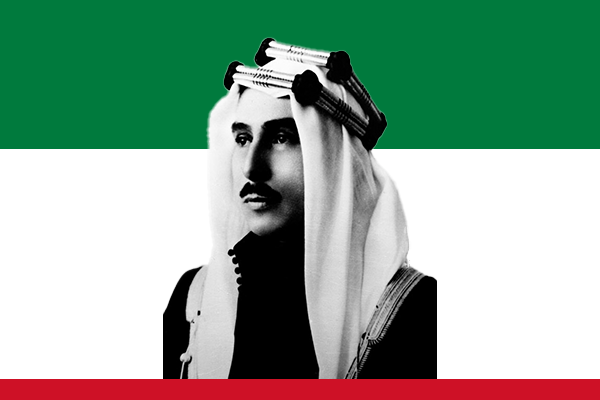
Early Life and Royal Background
King Talal bin Abdullah was born on 26 February 1909 in Mecca, then part of the Ottoman Empire. He was the eldest son of King Abdullah I, the founder and first monarch of the Hashemite Kingdom of Jordan. Belonging to the respected Hashemite family, which traces its lineage to the Prophet Muhammad, Talal grew up with a strong sense of political responsibility and public service. His early education took place in the region, followed by military training abroad, which prepared him for leadership within both the army and the state.
From a young age, Talal showed intellectual curiosity and a keen interest in governance. His exposure to different political systems influenced his later vision for Jordan, particularly his belief in constitutional rule and institutional governance.
Military Career and Preparation for Kingship
Before ascending the throne, Talal bin Abdullah pursued a military career, training at prestigious institutions, including the Royal Military Academy Sandhurst in the United Kingdom. This experience shaped his disciplined outlook and understanding of modern state administration. He later served in the Arab Legion, Jordan’s armed forces, where he gained respect among officers and officials.
As crown prince, Talal assisted his father in matters of defense and administration. He observed firsthand the challenges of building a new state amid regional instability, the Arab-Israeli conflict, and the complexities of post-colonial Middle Eastern politics.
Accession to the Throne
King Talal bin Abdullah became King of Jordan on 20 July 1951 following the assassination of his father, King Abdullah I, in Jerusalem. His accession came at a critical moment when Jordan faced internal pressures, regional tensions, and the need for political reform. Despite the emotional and political shock surrounding his father’s death, King Talal assumed his responsibilities with determination and clarity of purpose.
Although his reign lasted only about one year, it proved to be one of the most significant periods in Jordan’s constitutional history.
The 1952 Constitution and Political Vision
King Talal’s most enduring legacy is the Jordanian Constitution of 1952, which he championed and approved during his reign. This constitution transformed Jordan into a constitutional monarchy and established a clear separation of powers among the executive, legislative, and judicial branches. It guaranteed fundamental rights and freedoms, including freedom of speech, equality before the law, and protection of personal liberties.
Talal believed that a modern Arab state should rest on democratic principles and the rule of law. His vision aimed to balance the authority of the monarchy with representative institutions, ensuring stability while allowing political participation. The constitution he endorsed remains the cornerstone of Jordan’s political system to this day.
Abdication and Health Challenges
Despite his reformist agenda, King Talal’s reign was cut short due to health concerns. In August 1952, after medical evaluations confirmed that he was suffering from serious mental health issues, the Jordanian parliament decided to relieve him of his duties. He formally abdicated the throne in favor of his eldest son, Hussein, who later became one of the most influential leaders in the modern Middle East.
Following his abdication, King Talal spent much of his life receiving medical care abroad, largely away from public affairs.
Legacy and Historical Importance
King Talal bin Abdullah passed away on 7 July 1972, but his impact on Jordanian history remains profound. Although his time as king was brief, his commitment to constitutional governance set Jordan on a stable political path. The 1952 Constitution continues to guide the country’s legal and political framework, reflecting his forward-looking ideals.