Introduction

Spain is a parliamentary monarchy with a constitutional framework established in 1978 after the end of Francisco Franco’s dictatorship. While the country has a King as the head of state, the President of the Government—commonly referred to as the Prime Minister—is the head of the executive branch. This role is analogous to a prime minister in other parliamentary systems and is responsible for forming the government, implementing policies, and representing Spain internationally.

LIST OF PRESIDENTS OF SPAIN

="timeline-item"
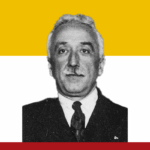
Niceto Alcalá-Zamora

Niceto Alcalá-Zamora (1877–1949) was a prominent Spanish politician and lawyer who served as the first President of the Second Spanish Republic from 1931 to 1936. A liberal monarchist turned republican, he played a key role in the establishment of the Republic after King Alfonso XIII’s exile. Alcalá-Zamora focused on democratic reforms, including freedom of the press and regional autonomy. His presidency ended controversially when he was removed by the Cortes in 1936 due to political conflicts with the government and rising polarization.

="timeline-item"
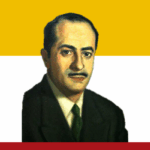
Diego Martínez Barrio

Diego Martínez Barrio (1883–1962) was a prominent Spanish politician and statesman, known for his dedication to democratic ideals during turbulent times in Spain. A founder of the Republican Union party, he served briefly as President of the Spanish Republic in 1936 during the Second Republic. Martínez Barrio was also Prime Minister in 1933 and a key advocate for dialogue between political factions to prevent civil conflict. He spent much of the Spanish Civil War and Franco’s dictatorship in exile, remaining committed to Republican principles until his death.

="timeline-item"
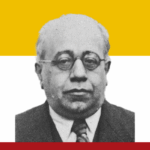
Manuel Azaña

Manuel Azaña (1880–1940) was a prominent Spanish politician, writer, and intellectual, best known for his leadership during the Second Spanish Republic. He served as Prime Minister from 1931 to 1933 and later as President of the Republic from 1936 to 1939. Azaña was a strong advocate for secularism, education reform, and modernization of Spain, seeking to reduce the influence of the monarchy and the church. His tenure was marked by political turbulence and the outbreak of the Spanish Civil War.

="timeline-item"
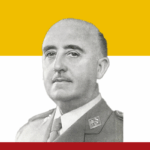
Francisco Franco

Francisco Franco (1892–1975) was a Spanish military general who ruled Spain as a dictator from 1939 until his death in 1975. Rising to prominence during the Spanish Civil War, he led the Nationalist forces to victory and established an authoritarian regime known as the Francoist State. Franco’s rule was marked by political repression, censorship, and centralization of power, but also economic modernization in later years. His death paved the way for Spain’s transition to democracy and the 1978 Constitution.

="timeline-item"
Alejandro Rodríguez de Valcárcel

Alejandro Rodríguez de Valcárcel (1917–1976) was a Spanish politician and a prominent figure during the Francoist regime. He served as the President of the Cortes Españolas, Spain’s legislative assembly under Francisco Franco, from 1969 until his death in 1976. Known for his loyalty to the Francoist state, Valcárcel played a key role in maintaining the legislative framework of the dictatorship. His tenure coincided with Spain’s transitional period, and he is remembered for his influence within the political structures of Francoist Spain.

List of Presidents of Spain

Adolfo Suárez (1976–1981) – A key figure in Spain’s transition to democracy, Suárez oversaw the drafting of the 1978 Constitution, legalized political parties, and helped guide the country from dictatorship to parliamentary democracy.

Leopoldo Calvo-Sotelo (1981–1982) – Succeeding Suárez, Calvo-Sotelo’s tenure was marked by Spain’s entry into NATO and consolidation of democratic institutions.

Felipe González (1982–1996) – Representing the Spanish Socialist Workers’ Party (PSOE), González became one of Spain’s longest-serving presidents. His tenure focused on modernizing the economy, improving social services, and strengthening Spain’s role in the European Community.

José María Aznar (1996–2004) – As a member of the People’s Party (PP), Aznar’s leadership emphasized economic liberalization, privatization, and Spain’s alignment with international allies, including support for the Iraq War.

José Luis Rodríguez Zapatero (2004–2011) – A PSOE leader, Zapatero’s government is known for progressive social reforms, including gender equality laws, same-sex marriage legalization, and withdrawal from Iraq.

Mariano Rajoy (2011–2018) – Rajoy, representing the PP, focused on economic recovery following the 2008 financial crisis, labor reforms, and addressing the Catalonia independence movement.

Pedro Sánchez (2018–present) – As the current PSOE president, Sánchez has led Spain through the COVID-19 pandemic, advocated for social welfare reforms, and promoted environmental and climate policies.

Throughout Spain’s modern democratic era, the President of the Government has played a crucial role in navigating political transitions, economic challenges, and Spain’s evolving place in Europe and the world. The office remains a symbol of democratic stability and governance in a country with a rich and complex history.
Back to top of page