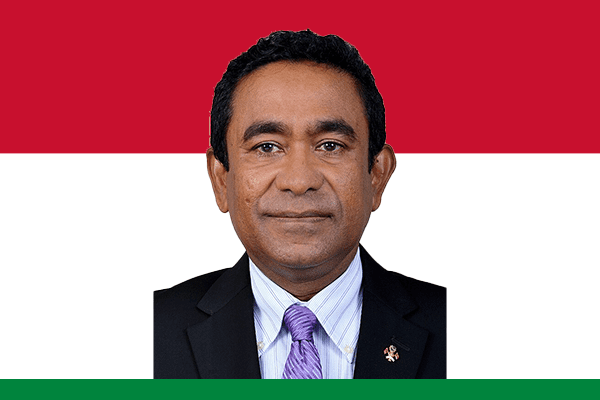
Early Life and Political Background
Abdulla Yameen Abdul Gayoom was born on May 21, 1959, in Malé, the capital of the Maldives. He belongs to a well-known political family and is the half-brother of former President Maumoon Abdul Gayoom, who ruled the Maldives for three decades. Yameen studied political science and later became active in national politics. Over the years, he held several important positions, including membership in parliament and leadership roles within political parties. His long political experience helped him build a strong base of support before entering the presidential race.
Presidency and Leadership
Abdulla Yameen won the 2013 presidential election after a highly competitive campaign. Once he took office, he promised economic progress, stronger national security, and better public services. His administration launched major infrastructure projects, including roads, bridges, housing developments, and airport expansion. One of the most notable projects linked to his era was the Sinamalé Bridge, which improved connectivity between Malé and Hulhulé.
Yameen strongly promoted tourism and foreign investment. Under his leadership, the Maldives welcomed more development partnerships, particularly with China. His government supported large-scale projects under international investment programs, which increased economic activity and strengthened the country’s global profile.
Achievements and Policies
During his presidency, Yameen focused heavily on modernization. He encouraged urban development and expanded public infrastructure to meet the needs of a growing population. His administration improved transportation networks and pushed for housing solutions in the crowded capital region. These efforts helped create a visible image of progress.
He also emphasized economic diversification, although tourism remained the backbone of the Maldivian economy. His government worked to attract foreign capital and promote business opportunities. Many supporters believed that his policies helped improve the country’s infrastructure faster than previous administrations.
Controversies and Criticism
Despite these achievements, Yameen’s presidency faced strong criticism. Opposition leaders, journalists, and international observers accused his government of limiting political freedoms and weakening democratic institutions. Several opposition figures were arrested, and critics argued that the space for free expression became narrower during his rule.
His administration also faced corruption allegations and legal challenges. After leaving office in 2018, Yameen remained active in politics but also became involved in court cases related to financial misconduct. These controversies affected his reputation both at home and abroad.
Legacy
Abdulla Yameen’s legacy is complex. He is remembered as a leader who pushed the Maldives toward rapid infrastructure growth and stronger international investment. At the same time, many people associate his presidency with political tension and democratic concerns. His impact on the Maldives continues to shape public debate and national politics.
Conclusion
President Abdulla Yameen remains a significant figure in Maldivian history. His leadership combined ambitious development goals with controversial political methods. Whether viewed as a modernizer or a divisive leader, his presidency left a lasting mark on the Maldives and continues to influence the nation’s political future.