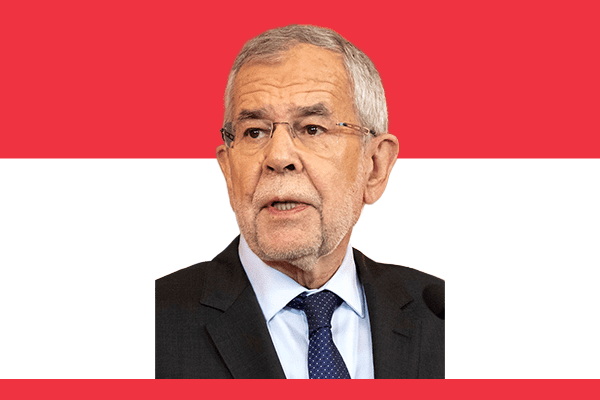
Early Life and Education
Alexander Van der Bellen was born on January 18, 1944, in Vienna, Austria. His family had Russian and Estonian roots and fled to Austria during World War II to escape political turmoil. This background shaped his worldview and strengthened his belief in democracy and international cooperation.
He pursued higher education at the University of Innsbruck, where he studied economics. He later became a professor of economics, teaching at several universities. His academic career focused on public finance and economic theory, and he gained respect as a knowledgeable and thoughtful scholar.
Entry into Politics
Van der Bellen entered politics in the 1990s when he joined the Austrian Green Party. He quickly rose through the ranks due to his expertise and leadership abilities. In 1997, he became the party’s leader and transformed it into a significant force in Austrian politics.
He served in the National Council, Austria’s lower house of parliament, where he actively contributed to debates on economic policy, environmental protection, and social justice. Instead of remaining confined to academic circles, he engaged directly with public issues and helped shape national policies.
Presidential Election and Victory
In 2016, Alexander Van der Bellen ran as an independent candidate in Austria’s presidential election. The election became one of the most closely contested in Austrian history. He faced strong competition but ultimately secured victory after a repeat runoff election.
His campaign emphasized European unity, tolerance, and democratic values. He connected with voters who sought stability and progressive leadership. When he assumed office in January 2017, he pledged to serve all Austrians and uphold the constitution.
Role and Responsibilities
As President of Austria, Van der Bellen performs both ceremonial and constitutional duties. He appoints the federal government, oversees political transitions, and ensures that the country’s laws align with the constitution. During times of political uncertainty, he actively mediates and maintains stability.
He represents Austria internationally, strengthening diplomatic relations with other nations. He consistently supports the European Union and promotes cooperation among member states. His leadership reflects a commitment to peace, dialogue, and mutual respect.
Leadership Style and Values
Van der Bellen leads with a calm and thoughtful approach. He listens carefully to different perspectives and encourages constructive dialogue. Instead of taking a confrontational stance, he promotes consensus and cooperation.
He strongly advocates for environmental protection, human rights, and social inclusion. His background in the Green Party continues to influence his priorities. He actively speaks about climate change and supports sustainable policies that benefit future generations.
Challenges and Achievements
During his presidency, Van der Bellen has faced political instability, including changes in government and coalition disputes. He handled these situations with composure and ensured smooth transitions of power. His steady leadership has reinforced public trust in Austria’s institutions.
He also guided Austria through global challenges, including economic uncertainties and international tensions. By maintaining a balanced and diplomatic approach, he strengthened Austria’s reputation on the global stage.
Legacy and Significance
Alexander Van der Bellen has shaped Austria’s presidency through active engagement and principled leadership. He has demonstrated that a head of state can play a meaningful role in guiding a nation without overstepping constitutional limits.
His commitment to democracy, environmental sustainability, and European unity defines his legacy. He continues to inspire confidence among citizens and remains a respected voice in international affairs.
Conclusion
Alexander Van der Bellen stands as a symbol of stability, integrity, and modern leadership in Austria. Through active involvement and thoughtful decision-making, he has strengthened the role of the presidency and upheld democratic values in a rapidly changing world.