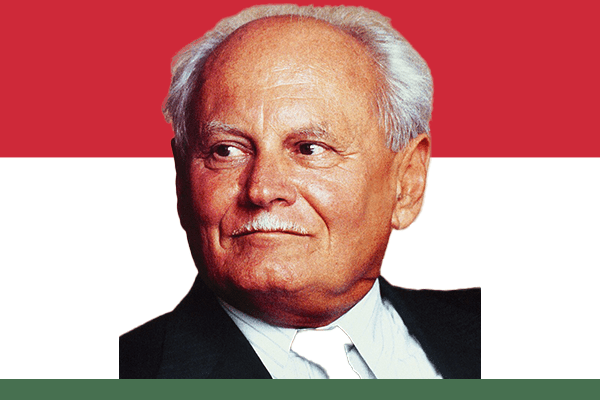
Early Life and Education
Árpád Göncz was born on February 10, 1922, in Budapest, Hungary. He grew up in a middle-class family and pursued higher education in law at Pázmány Péter University. During World War II, he actively resisted Nazi occupation and joined efforts to protect Hungary’s independence.
After the war, he became involved in politics and supported democratic reforms. However, when the communist regime took control, it suppressed many political freedoms. Göncz continued to express his views openly, even when authorities discouraged dissent.
Role in the 1956 Hungarian Revolution
Göncz actively participated in the Hungarian Revolution of 1956, which aimed to end Soviet influence in Hungary. When Soviet forces crushed the revolution, they arrested many participants. Authorities imprisoned Göncz in 1957 and sentenced him to life imprisonment.
He spent several years in prison, where he used his time productively. He learned English and began translating literary works. In 1963, the government granted him amnesty, and he returned to civilian life with renewed determination.
Literary Career and Intellectual Contributions
After his release, Göncz built a successful career as a writer and translator. He translated works by prominent authors, including J. R. R. Tolkien and William Faulkner, into Hungarian. Through his translations, he introduced global literature to Hungarian readers.
He also wrote novels, essays, and plays that reflected his experiences and political beliefs. His intellectual contributions earned him respect within Hungary’s cultural and academic circles.
Political Career and Presidency
In the late 1980s, Hungary began moving toward democracy. Göncz actively joined this transformation and became a founding member of the Alliance of Free Democrats. In 1990, Hungary’s parliament elected him as President.
As president, Göncz actively promoted democratic values, human rights, and freedom of expression. He worked to ensure that Hungary’s transition remained peaceful and stable. Rather than exercising authoritarian power, he encouraged dialogue and cooperation among political groups.
He served two terms as president, making him one of the most influential figures in Hungary’s modern history. His leadership style remained calm, approachable, and principled.
Personal Life
Árpád Göncz married Zsuzsa Göncz, and together they raised a family. Despite his political responsibilities, he remained deeply connected to literature and intellectual life. He maintained a reputation for humility and integrity throughout his career.
Legacy and Impact
Göncz left a lasting legacy as a symbol of democracy and resilience. He transformed personal hardship into strength and used his experiences to guide the nation. His leadership helped Hungary establish a stable democratic system after decades of authoritarian rule.
He earned widespread respect both domestically and internationally. Many people remember him not only as a political leader but also as a moral authority who valued freedom and justice.
Conclusion
Árpád Göncz stands as a key figure in Hungary’s modern history. Through active leadership, intellectual contributions, and unwavering commitment to democratic ideals, he helped shape the nation’s future. His life story continues to inspire those who value courage, resilience, and the pursuit of freedom.