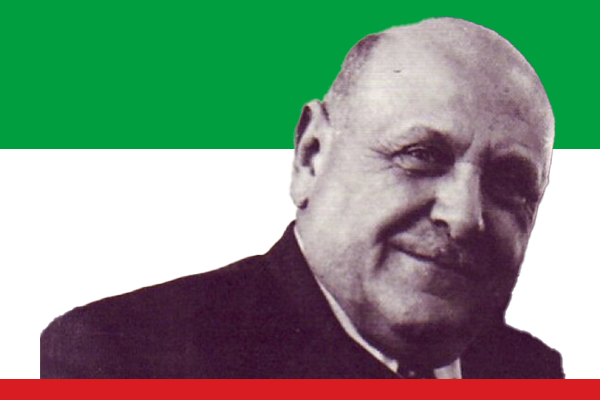
President Bechara Khalil El Khoury
Bechara Khalil El Khoury was one of the most significant political figures in modern Lebanese history and served as the first President of independent Lebanon. Born on August 10, 1890, in Beirut, which was then part of the Ottoman Empire, El Khoury grew up in a politically active Maronite Christian family. His early exposure to public affairs shaped his interest in law and governance. He pursued legal studies and became a successful lawyer, earning respect for his eloquence and commitment to Lebanese autonomy.
El Khoury entered politics during a transformative period in Middle Eastern history. After the collapse of the Ottoman Empire following World War I, Lebanon came under French Mandate rule. During this time, El Khoury became a leading advocate for Lebanese independence. He co-founded the Constitutional Bloc, a political movement that demanded full sovereignty and constitutional governance. His nationalist stance gained widespread support among various religious communities, reflecting his belief in unity and coexistence in Lebanon’s diverse society.
In 1943, Bechara El Khoury was elected President of Lebanon. His election marked a turning point in the country’s struggle for independence. Shortly after assuming office, El Khoury and his government amended the Lebanese constitution to remove articles that legitimized French authority. In response, French authorities arrested him along with other prominent leaders and imprisoned them in the Rashaya Citadel. This bold action by the French sparked nationwide protests and demonstrations. Lebanese citizens from different religious and political backgrounds united in demanding their leaders’ release and complete independence.
The strong national movement forced France to release El Khoury and his colleagues on November 22, 1943. This date is celebrated annually as Lebanon’s Independence Day. Following his release, El Khoury resumed his presidency and worked toward consolidating the country’s sovereignty. His leadership during this critical moment earned him recognition as a symbol of Lebanese independence and national unity.
One of the most notable achievements during El Khoury’s presidency was the establishment of the National Pact in 1943. Although unwritten, this agreement became the foundation of Lebanon’s political system. The National Pact created a power-sharing arrangement among the country’s major religious communities. According to this understanding, the President would be a Maronite Christian, the Prime Minister a Sunni Muslim, and the Speaker of Parliament a Shia Muslim. This system aimed to ensure balanced representation and maintain harmony in Lebanon’s multi-confessional society. While it promoted stability in the early years, it also shaped Lebanon’s political dynamics for decades to come.
El Khoury served two terms as president, from 1943 to 1952. During his administration, Lebanon experienced economic growth and developed a reputation as a center for finance, trade, and tourism in the Middle East. Beirut emerged as a vibrant cultural and commercial hub. However, his presidency was not without controversy. In his later years in office, critics accused his administration of corruption, favoritism, and mismanagement. Public dissatisfaction grew, leading to widespread protests in 1952.
Facing mounting opposition, El Khoury resigned from office in September 1952. His resignation demonstrated the strength of public opinion in Lebanon’s political system. After stepping down, he withdrew from active politics and lived quietly until his death on January 11, 1964.
Bechara Khalil El Khoury remains an important figure in Lebanese history. He is remembered primarily for his leadership during the country’s independence movement and for helping establish the political framework of modern Lebanon. While debates continue about the successes and shortcomings of his presidency, his role in achieving independence and shaping the early republic remains a defining chapter in Lebanon’s