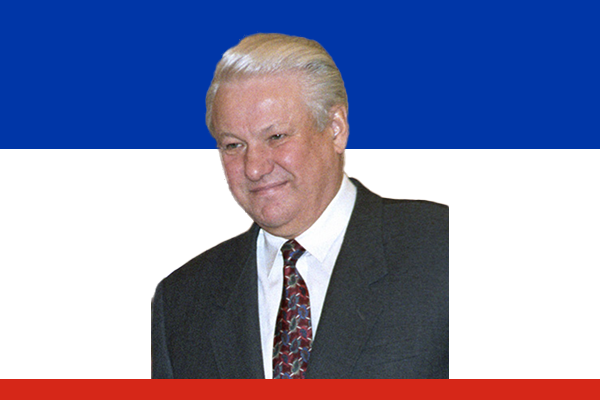
Early Life and Political Beginnings
Boris Nikolayevich Yeltsin was born on February 1, 1931, in the village of Butka, Sverdlovsk Oblast. He grew up in a modest family and developed a reputation for hard work and resilience. After graduating from the Ural Polytechnic Institute in 1955 with a degree in construction engineering, Yeltsin began his professional life as a builder. His leadership qualities soon attracted attention, and he actively pursued a political career through the Communist Party.
By the 1970s, Yeltsin had risen to prominent administrative positions in the Sverdlovsk region. He actively managed large-scale urban development projects and gained respect for his straightforward management style. His early years in politics revealed his drive for reform and his readiness to challenge bureaucratic inefficiency.
Rise to National Prominence
In the 1980s, Yeltsin’s career took a national turn when Soviet leader Mikhail Gorbachev brought him to Moscow. Yeltsin became the First Secretary of the Moscow City Party Committee in 1985, a role that placed him among the country’s political elite. However, he soon began openly criticizing the slow pace of Gorbachev’s reforms, calling for deeper changes and greater transparency. His boldness earned him both admiration and hostility within the Communist Party.
In 1987, Yeltsin resigned from the Moscow Party leadership, refusing to conform to political stagnation. He actively positioned himself as a reformer who represented ordinary Russians’ frustrations with Soviet bureaucracy.
The Fall of the Soviet Union and Presidential Victory
As the Soviet Union began to crumble, Yeltsin seized the opportunity to lead Russia toward a new political future. In June 1991, he won Russia’s first democratic presidential election with overwhelming support. Yeltsin actively promoted democracy, free-market reforms, and national sovereignty.
In August 1991, when hardline communists attempted a coup to reverse reforms, Yeltsin famously climbed atop a tank outside the Russian Parliament building and rallied the people to resist. His defiance symbolized Russia’s break from totalitarianism and his commitment to democracy.
Economic Reforms and Challenges
As president, Yeltsin launched ambitious economic reforms aimed at transitioning Russia from a state-controlled system to a market economy. He privatized industries, encouraged private enterprise, and sought to integrate Russia into the global economy. However, these rapid reforms led to inflation, unemployment, and hardship for millions of Russians.
Despite criticism, Yeltsin remained steadfast, arguing that only bold reforms could secure Russia’s long-term prosperity. He actively worked with Western nations to attract investment and support democratic institutions, even as domestic opposition grew.
Confronting Political Crisis
Yeltsin faced a major political crisis in 1993 when tensions erupted between him and the Russian Parliament. He ordered military forces to end the standoff, asserting presidential authority and reinforcing the new constitution. Although his decision was controversial, Yeltsin defended it as necessary to protect democracy and national stability.
In 1996, Yeltsin won re-election after a hard-fought campaign. However, his health declined, and his popularity waned due to ongoing economic struggles and corruption scandals. Despite these challenges, he continued to shape Russia’s democratic framework and foreign relations.
Legacy and Resignation
On December 31, 1999, Boris Yeltsin unexpectedly announced his resignation, transferring power to his chosen successor, Vladimir Putin. In his farewell address, Yeltsin expressed regret for the hardships Russians endured during his reforms but urged them to continue building a free and prosperous nation.
Yeltsin retired from public life and passed away on April 23, 2007. Russians remember him as a courageous leader who dismantled the Soviet system and ushered in democracy, though his presidency also left deep economic and social scars.
Conclusion
Boris Yeltsin’s presidency marked a turning point in Russian history. He actively pursued reform, embraced democracy, and faced immense challenges with determination. Despite controversy, his leadership paved the way for modern Russia and reshaped the nation’s identity in the post-Soviet world.