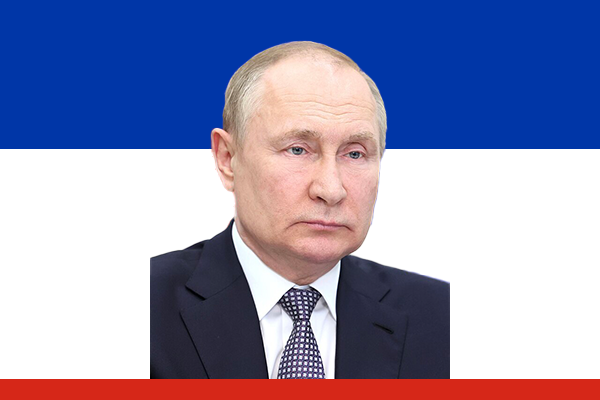
Mr. Vladimir Putin
In Office: 7 May 2012 – Present
7 May 2000 – 7 May 2008
Political Party: Independent
Home State: Saint Petersburg
Lifespan: Born 1952
Image credits available here.
Country: Russia
Early Life and Career
Vladimir Vladimirovich Putin was born on October 7, 1952, in Leningrad (now Saint Petersburg), Russia. He grew up in a modest household and developed a strong sense of discipline and patriotism. After studying law at Leningrad State University, Putin joined the KGB, the Soviet Union’s security agency, in 1975.
During his years in the KGB, he actively served in intelligence operations, primarily in East Germany. These experiences sharpened his understanding of global politics, strategy, and state security. When the Soviet Union collapsed in 1991, Putin transitioned into local politics, where he quickly established himself as a skilled administrator and political strategist.
Rise to Power
Putin’s political ascent accelerated when he joined the administration of Saint Petersburg’s mayor, Anatoly Sobchak. He actively managed foreign relations and investments for the city, gaining valuable experience in governance. By the late 1990s, his reputation as a competent, loyal, and pragmatic leader caught the attention of national authorities.
In 1999, then-President Boris Yeltsin appointed Putin as Prime Minister of Russia. Later that year, when Yeltsin resigned, Putin became Acting President. He won the presidential election in 2000, beginning an era of centralized leadership and political stability. Putin actively restructured the Russian government, restored federal authority, and revitalized the country’s economy after a decade of post-Soviet turmoil.
Economic and Political Reforms
As president, Putin actively pursued policies to strengthen Russia’s economy and global influence. He supported the nationalization of key industries, especially in the energy sector, and used oil and gas revenues to stabilize the economy. His administration actively reduced foreign debt, built financial reserves, and improved living standards for millions of Russians.
Politically, Putin consolidated power around the presidency. He actively limited the influence of regional governors and restructured the political system to ensure federal control. Critics accused him of curbing democratic freedoms, but supporters praised him for restoring order and national pride after years of instability.
Foreign Policy and Global Strategy
Putin has played an active role in reshaping global geopolitics. He sought to restore Russia’s position as a major world power and counter Western influence. His government actively pursued assertive foreign policies, including the annexation of Crimea in 2014 and military involvement in Syria to support President Bashar al-Assad.
Putin consistently emphasized sovereignty, national security, and a multipolar world order. He actively built alliances with China, India, and other non-Western nations, balancing Russia’s relationships amid ongoing tensions with the United States and the European Union.
Public Image and Leadership Style
Putin projects an image of strength, resilience, and patriotism. He actively cultivates this persona through public appearances that highlight his physical fitness, outdoor activities, and direct engagement with citizens. His leadership style combines decisive authority with strategic patience, allowing him to maintain control over Russian politics for more than two decades.
Legacy and Continuing Influence
Vladimir Putin continues to shape Russia’s political and economic direction. His leadership has transformed the nation into a global power with renewed confidence and assertiveness. He actively defends Russia’s interests on the international stage and seeks to preserve its cultural and political sovereignty.
Despite criticism from Western governments regarding human rights and democracy, Putin’s domestic support remains strong. Many Russians credit him with restoring stability, national pride, and global respect.
Conclusion
President Vladimir Putin’s career reflects ambition, strategy, and unwavering control. Through decisive action and bold diplomacy, he has actively molded Russia’s modern identity. His influence reaches far beyond national borders, making him one of the defining political figures of the 21st century.