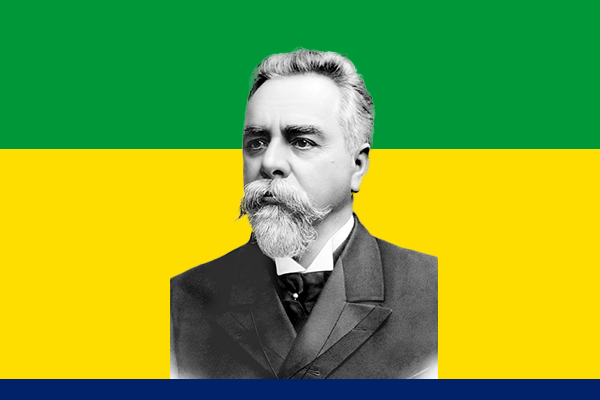
Early Life and Political Beginnings
Manuel Ferraz de Campos Sales was born on February 15, 1841, in Campinas, São Paulo. He grew up during a time of great political transformation in Brazil. As a young man, he pursued law at the prestigious Faculdade de Direito de São Paulo. His education helped him develop a deep understanding of law, politics, and the workings of government. Campos Sales began his political journey as a member of the Liberal Party and later joined the Republican movement that sought to end the monarchy and establish a republic in Brazil.
As an active political figure, he represented São Paulo in the provincial assembly and gained recognition for his disciplined and rational approach to governance. He used his influence to support the republican cause and contributed to shaping the early structure of Brazil’s new political order after the monarchy’s fall in 1889.
Rise to National Leadership
Campos Sales became one of the key leaders in the newly established Republic. His success as a senator and his experience as Minister of Justice under President Prudente de Morais helped him gain national prominence. He implemented reforms that aimed to consolidate republican institutions and strengthen the executive branch.
When President Prudente de Morais’s term ended in 1898, Campos Sales ran for president with strong backing from São Paulo’s political elite. He won the election and assumed office on November 15, 1898, becoming the fourth president of Brazil. His administration began during a time of financial crisis and political instability. Campos Sales immediately took action to restore Brazil’s economic and institutional order.
Economic Reforms and the Funding Loan
President Campos Sales faced one of Brazil’s worst financial crises. The government struggled with foreign debt and inflation, and the country’s currency had lost value. To address these problems, Campos Sales devised an ambitious plan known as the “Funding Loan.”
He negotiated with British creditors to consolidate and restructure Brazil’s foreign debt. This agreement extended payment deadlines and stabilized the economy. By enforcing strict fiscal policies and reducing government spending, Campos Sales restored confidence among investors and foreign governments. His financial prudence earned him a reputation as a responsible and capable leader.
Through his fiscal discipline, he reduced inflation and stabilized the currency. Though his policies demanded austerity and caused temporary hardship among citizens, he ensured long-term stability for Brazil’s economy. Campos Sales believed that sacrifices were necessary to build a strong and modern nation.
The Policy of the Governors
Campos Sales understood that political unity was essential for a functioning republic. To secure cooperation between the federal government and the states, he established the “Policy of the Governors.” This system allowed state governors to maintain autonomy in exchange for political support for the federal administration.
He strengthened alliances with regional leaders and created a stable political structure that lasted for decades. Although this system limited political competition and favored the ruling elites, it provided Brazil with much-needed stability during the early republican period. Campos Sales’s pragmatic approach ensured that the government avoided constant revolts and crises that had previously plagued the nation.
Legacy and Later Life
After completing his term in 1902, Campos Sales left office with Brazil’s finances stabilized and its political institutions strengthened. He returned to São Paulo, where he continued to write and participate in public discussions. His presidency marked a turning point in Brazil’s early republican history.
Campos Sales’s leadership emphasized discipline, pragmatism, and order. He believed that economic control and political cooperation were the foundations of a successful republic. Though critics accused him of supporting oligarchic rule, his policies helped shape a more stable political environment.
Campos Sales passed away on June 28, 1913, but his legacy endures. Historians remember him as the architect of Brazil’s early political stability and a leader who transformed crisis into opportunity through intellect and determination.
Conclusion
President Campos Sales led Brazil through one of its most challenging periods with intelligence and foresight. By stabilizing the economy, reforming governance, and building strong state alliances, he laid the groundwork for the country’s future growth. His presidency demonstrated how firm leadership and strategic reforms can guide a young nation toward stability and progress.